
Prepared by UK Roadworks Group · Updated 16 October 2026
Saw-cut patching and full-depth asphalt repairs
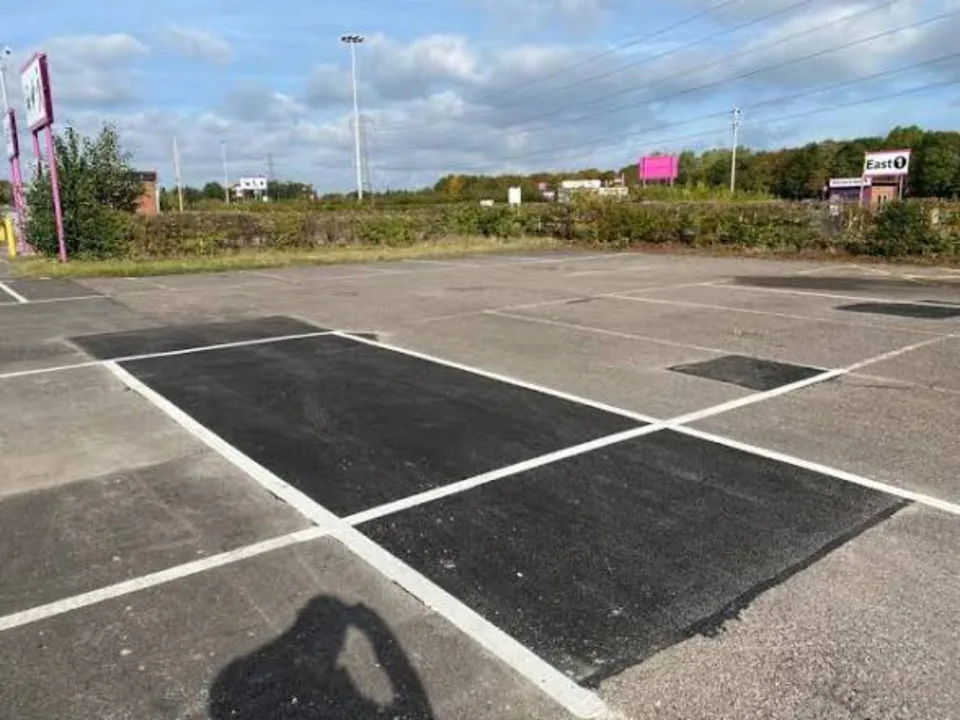
Isolated failed areas can be marked out and cut or planed back to suitable boundaries. The damaged material is removed, the exposed construction assessed and any required base repair completed before bonding, replacement asphalt, compaction and joint treatment.
“Full-depth repair” needs a defined depth and work boundary in the specification. It should not mean simply filling the visible hole. Repeated settlement, water or unstable material may require work below the asphalt layers.
Plane-and-inlay resurfacing
An inlay removes an agreed thickness of existing asphalt and replaces it within the retained pavement. Planing can help accommodate final levels at drains, kerbs, entrances and adjoining surfaces. The survey also identifies local weak areas that need a deeper repair.
The Glasgow distribution-centre project in our portfolio included approximately 60 mm planing, bonding, replacement SMA and sealed joints. That depth describes the recorded job. The removal depth and replacement construction for another site follow its own assessment and specification.
Regulating low or uneven surfaces
Regulating means correcting the prepared profile with suitable material before the final surface. It can form part of preparation for asphalt or surface dressing, but the material and method depend on the existing construction and intended traffic.
Identify where water collects, how the surface meets thresholds and where drainage is intended to run. Adding material without checking those levels can create a new problem. A failed base or moving construction needs attention before the finishing layer.
Overlay, reconstruction or surface dressing?
An overlay may be considered where the existing construction is suitable and there is room for the additional level. Where deterioration extends into the supporting pavement, local reconstruction or a more substantial rebuild may be needed.
Hot tar and chip surface dressing uses binder and stone chippings on a suitably prepared surface. It is a different treatment from laying an asphalt course. Preparation, base stability, traffic and the required finish determine whether it is appropriate for an estate road, farm lane or other area.
Make the specification clear
An asphalt mix name and a laying thickness describe different things. For example, “10 mm SMA” identifies a mix size; it does not mean a finished layer only 10 mm thick. The quotation should identify the material, required layers, preparation and compaction for the agreed work.
For HGV yards, public roads or client-designed schemes, send the pavement specification and any inspection or testing requirements. Vehicle turning, braking and standing loads matter alongside total area. A general “highway-grade” label cannot replace an agreed specification.
A documented example from our own work
Send a useful project brief
- A site plan with numbered defects and measured areas
- Wide photographs and close-ups, including drains and earlier repairs
- Traffic, loading, access restrictions and any supplied pavement design
- Required work window and responsibility for associated works
Every site is assessed individually. This guide explains the questions and work options to consider; the agreed design, specification and written scope determine the construction for your project.

 Visit our Facebook page