
View surface dressing — tar & chip gallery
Precision application.
A high-quality finish.
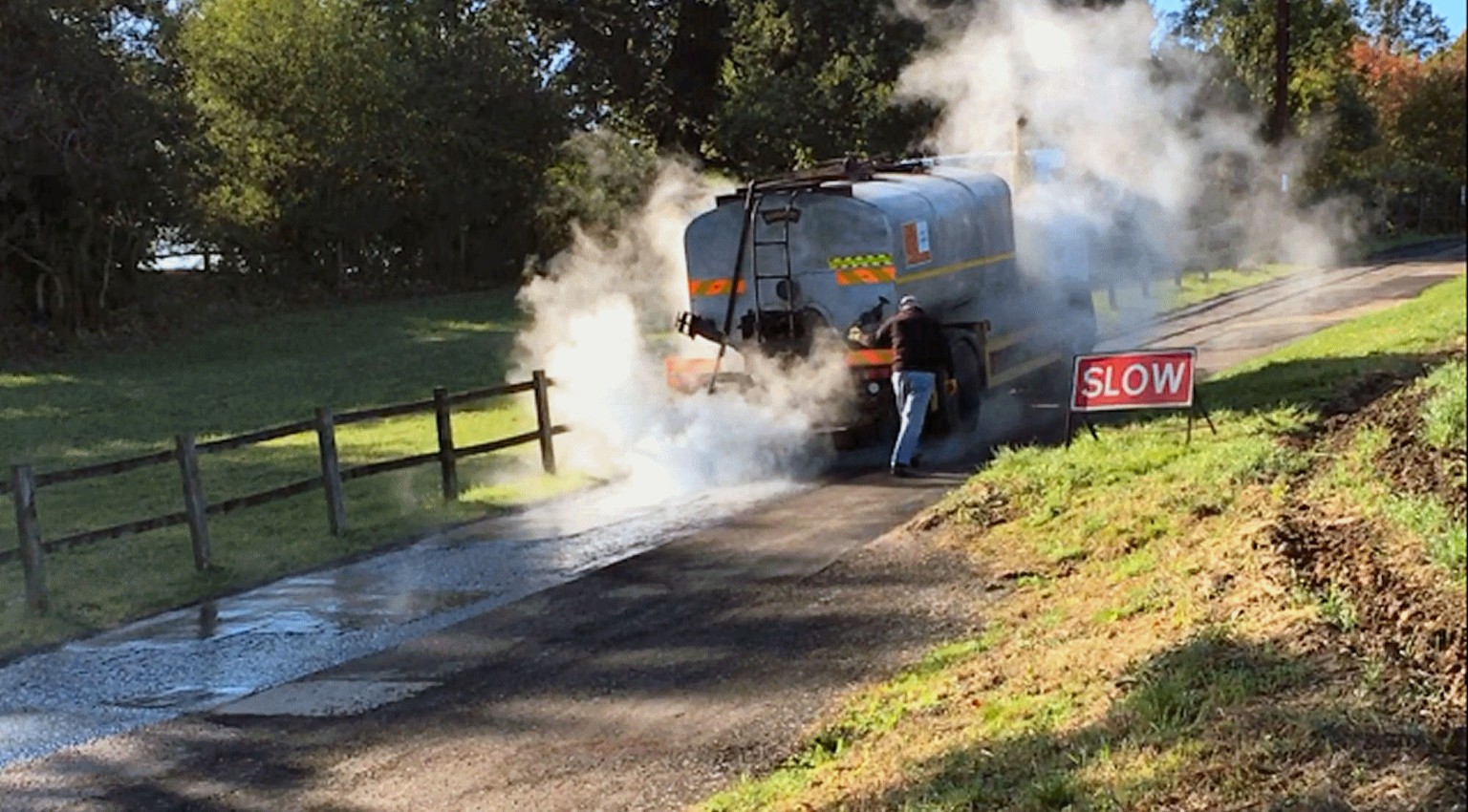
Our specialist 2-in-1 combi units combine bitumen spraying and chip spreading in one coordinated operation. Hot-applied latex polymer-modified bitumen is sprayed onto the prepared surface, with granite chippings or other selected stone applied within seconds.
The aggregate is then power rolled into the fresh binder. Careful control of application temperature, spray rate, stone coverage and rolling helps achieve a consistent finish and strong adhesion. Binder temperature is controlled to suit the product specification.
Our recommendation: a two-coat finish.
We recommend two coats of surface dressing for a high-quality finish. The first binder-and-stone application is followed by a second layer and further rolling, building up a more substantial stone dressing. Aggregate sizes, application rates and preparation are agreed for the base and intended use.
Groundwork and preparation included in the plan.
We can undertake pothole repairs and patching, general groundwork, grading, levelling and regulation before surface dressing. Low areas are brought up with suitable material, weak sections are repaired and the base is rolled and compacted ready for the agreed treatment.
OUR EQUIPMENT AT WORK
Two-in-one combi units in action.
Watch our tar-and-chip surface dressing on private drives, business access and rural roads. Our combi units combine bitumen spraying and chip spreading in one coordinated operation.
Select play to watch. Sound is muted initially; use the player controls to turn it on.
Surface dressing in Inverness
Our two-in-one combi unit working on a tree-lined private drive in Inverness, applying stone chippings as part of the tar-and-chip surface dressing process.
Surface dressing in Oban
Stone chippings being spread from our combi unit in Oban, followed by the machine working along the approach beside workshop buildings.
Tar & chip in Blairgowrie
Our combi unit applying tar-and-chip surface dressing along a rural access road in Blairgowrie, with close views of the fresh chippings and the route beside the field and buildings.
Where this service fits
- Private driveways, shared entrances and property access roads
- Farm lanes, agricultural yards, steadings, forecourts and estate roads
- Commercial access routes, yards and suitable parking areas
- Schools, nursing homes, pubs, bars, restaurants and hotel grounds
- Caravan parks, holiday parks, campsites, golf clubs and visitor attractions
- Footpaths, canal towpaths and other pedestrian routes
- Council, public sector and subcontract surface dressing packages
Private driveways and property access
Surface dressing can provide a stone finish for suitable private driveways, shared entrances and longer access roads. We assess the base, drainage, gradients and traffic before agreeing the preparation and aggregate.
The stone colour and size are discussed with you so the proposed finish suits the surroundings and use of the area.
Commercial, hospitality and community sites
We assess surface dressing for suitable roads, parking and access areas at businesses, schools, nursing homes, care homes, pubs, bars, restaurants, hotels, caravan parks, holiday parks, golf clubs and visitor attractions.
Commercial enquiries also include industrial premises, transport sites, docks and shipping yards. Suitability is assessed for the particular area, traffic and turning movements; we can discuss asphalt where that better meets the agreed requirements.
At occupied premises, we plan access and explain the initial-use and loose-chipping aftercare arrangements with the site representative.
Farm lanes, agricultural yards and steadings
Surface dressing enquiries are welcome for farm lanes, steadings, forecourts, estate roads and suitable agricultural yard areas. We assess the base and daily vehicle use before setting out repairs, regulation and the dressing specification.
Potholes, weak sections and uneven areas can be addressed within the preparation package before the binder and stone layers are applied.
Public sector roads, footpaths and canal towpaths
We welcome surface-dressing packages for suitable public sector and private roads, council premises, footpaths, canal-side paths and towpaths. The chosen treatment must suit the route, its users and the client’s specification.
Send drawings, quantities, site photographs and the intended programme for tender or subcontract work. Mainland and island transport arrangements are considered when planning the project.
Aggregate colours & finishes
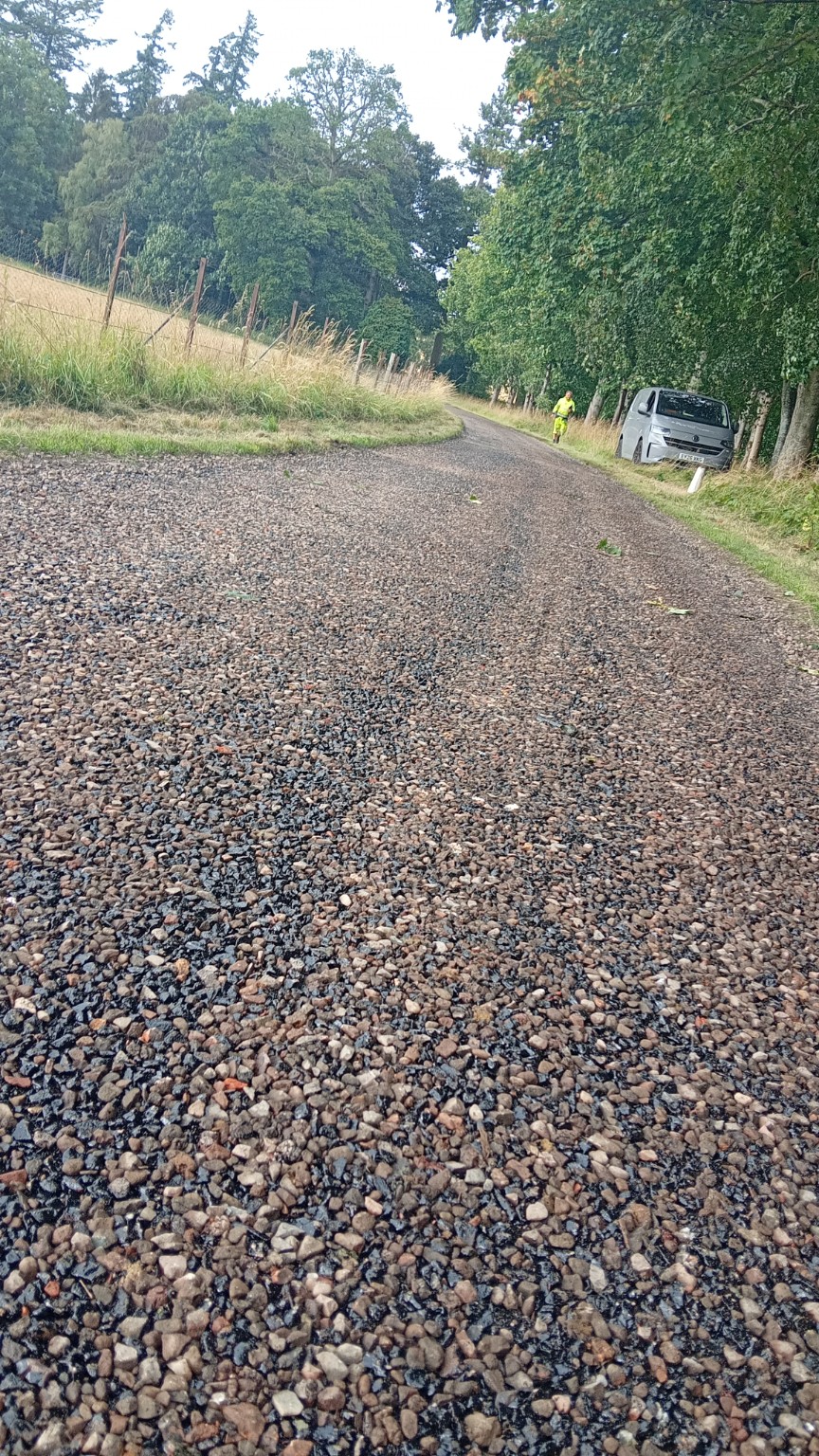
Commercial & public-sector roadstone.
For all our commercial and public-sector surface dressing projects, we use triple-washed, high-PSV granite roadstone chippings. The aggregate size and required polished stone value (PSV) are selected to suit the traffic, site conditions and agreed project specification.
Colour choices for private properties.
For private driveways, paths and access roads, we offer golden-coloured gravels, rustic tones and a range of other coloured chippings and stones. We help you select a suitable aggregate to complement your property, its surroundings and the way the surface will be used.
The stone chippings are bonded with bitumen. Whether you call it tar and chip, hot tar and chippings or bitumen bonded aggregate, we help you choose the colour and aggregate size for the job.
Ask us for a selection of available stone colours when requesting your quotation. We can discuss the options with you and agree your chosen finish, subject to material availability and suitability for the project.
How we approach the work
- Survey the base, drainage, levels, traffic and machinery access; agree the preparation, binder and stone specification.
- Clean the area and remove unsuitable loose material, soil and vegetation as required.
- Repair potholes, failed patches and broken edges, rebuilding weak areas to a sound, compacted base.
- Grade, level and regulate low or uneven areas with suitable material, then roll and compact the prepared base.
- Spray the first coat of hot-applied latex polymer-modified bitumen binder using our combi unit, with the selected stone chippings applied immediately afterwards.
- Roll the chippings into the fresh binder to seat the aggregate and establish an even surface.
- For our recommended two-coat system, apply the second binder and aggregate layer and roll in accordance with the agreed specification.
- Inspect the completed surface and explain opening to traffic, initial use, loose-chipping aftercare and any planned sweeping.
A high-quality surface starts with a stable base. We can include groundwork, grading, regulation, compaction and pothole repairs before dressing. Surface dressing follows the prepared profile; it cannot stabilise a moving slab or repair a failing base on its own. The required preparation is set out in your quotation.
Before & after surface dressing
Compare the before and after views of each project. Select a photograph to view it in full.
Balmachie Farms, Arbroath – Before & After Surface Dressing
A prepared stone-base area at Balmachie Farms in Arbroath was surfaced with heavy-duty hot tar and chip, machine laid using our specialist combi unit. These photographs show the prepared base and the freshly laid dark stone-chip finish across the farm entrance and access area.
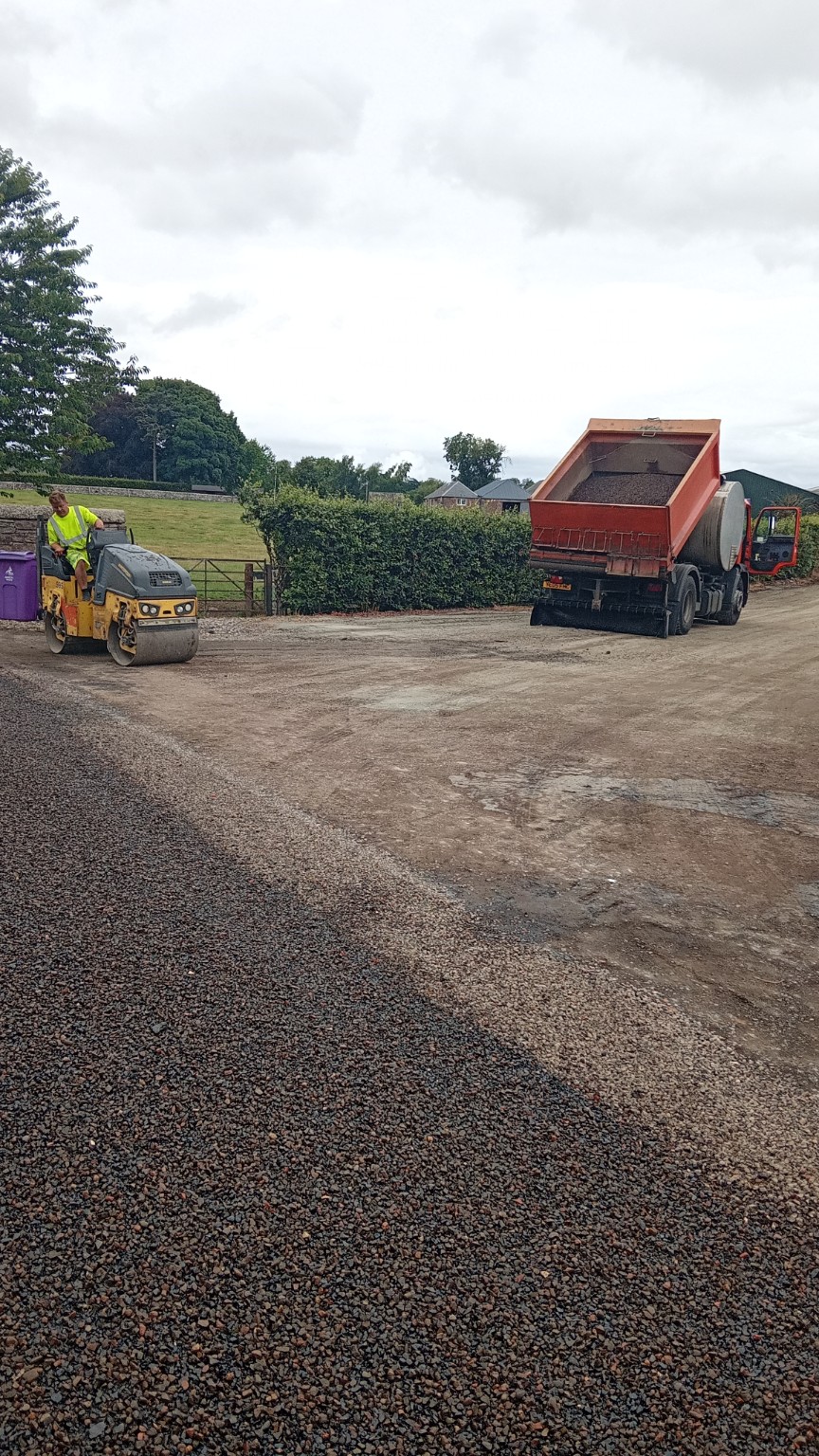
Prepared stone base, with our roller and combi unit on site as surfacing begins.
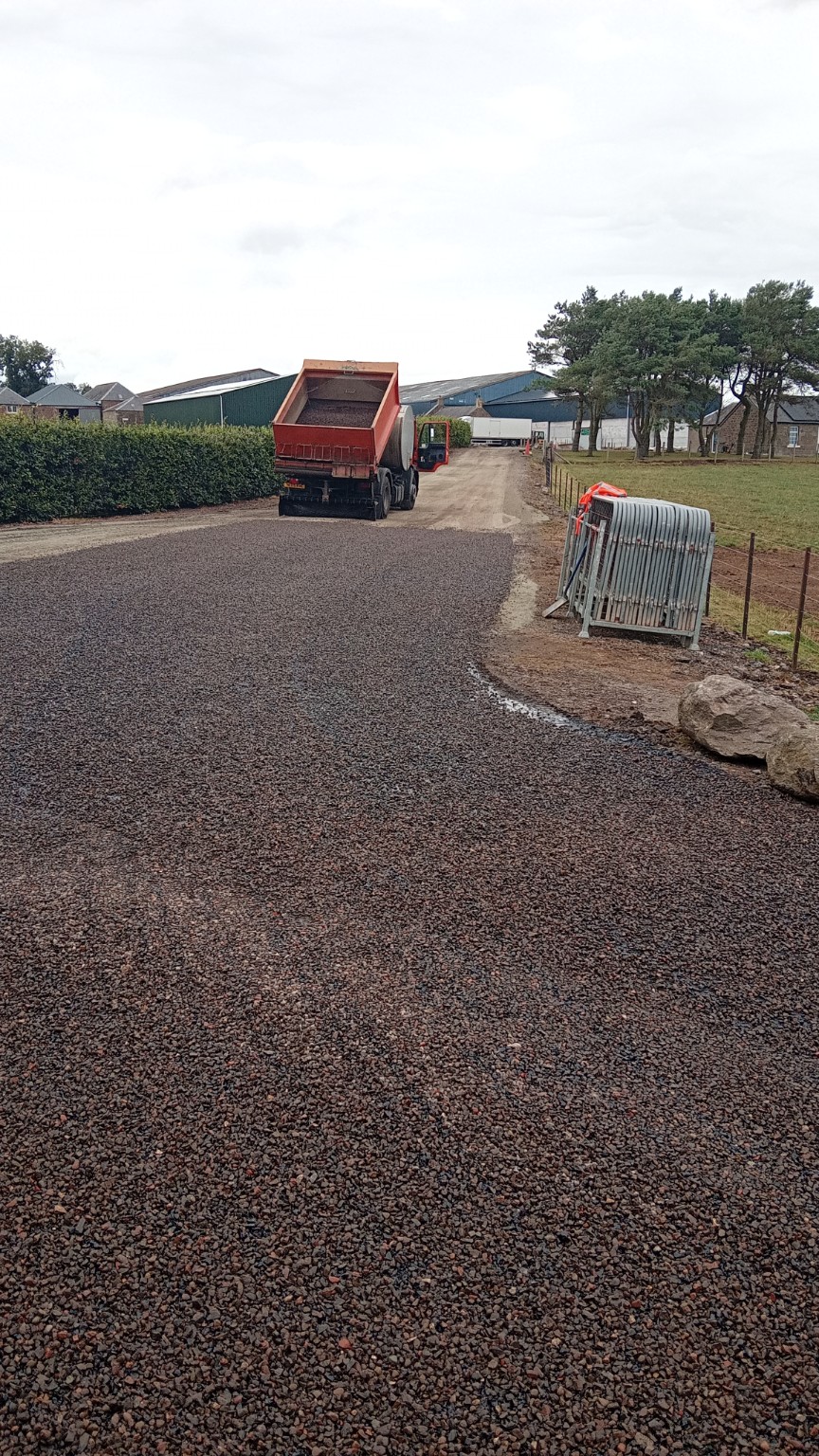
Freshly laid dark tar-and-chip finish across the entrance, with the combi unit continuing along the access road.
Dollerie House, Crieff – Two-Coat Tar & Chip Surface Dressing
The existing tarmac access road at Dollerie House in Crieff was failing and had been patched with road planings. Our team prepared the surface and repaired the potholes before machine laying two coats of hot polymer-modified bitumen and stone chippings. The tar-and-chip surface dressing provided a consistent new wearing surface across the access road, as shown in these before and after photographs.
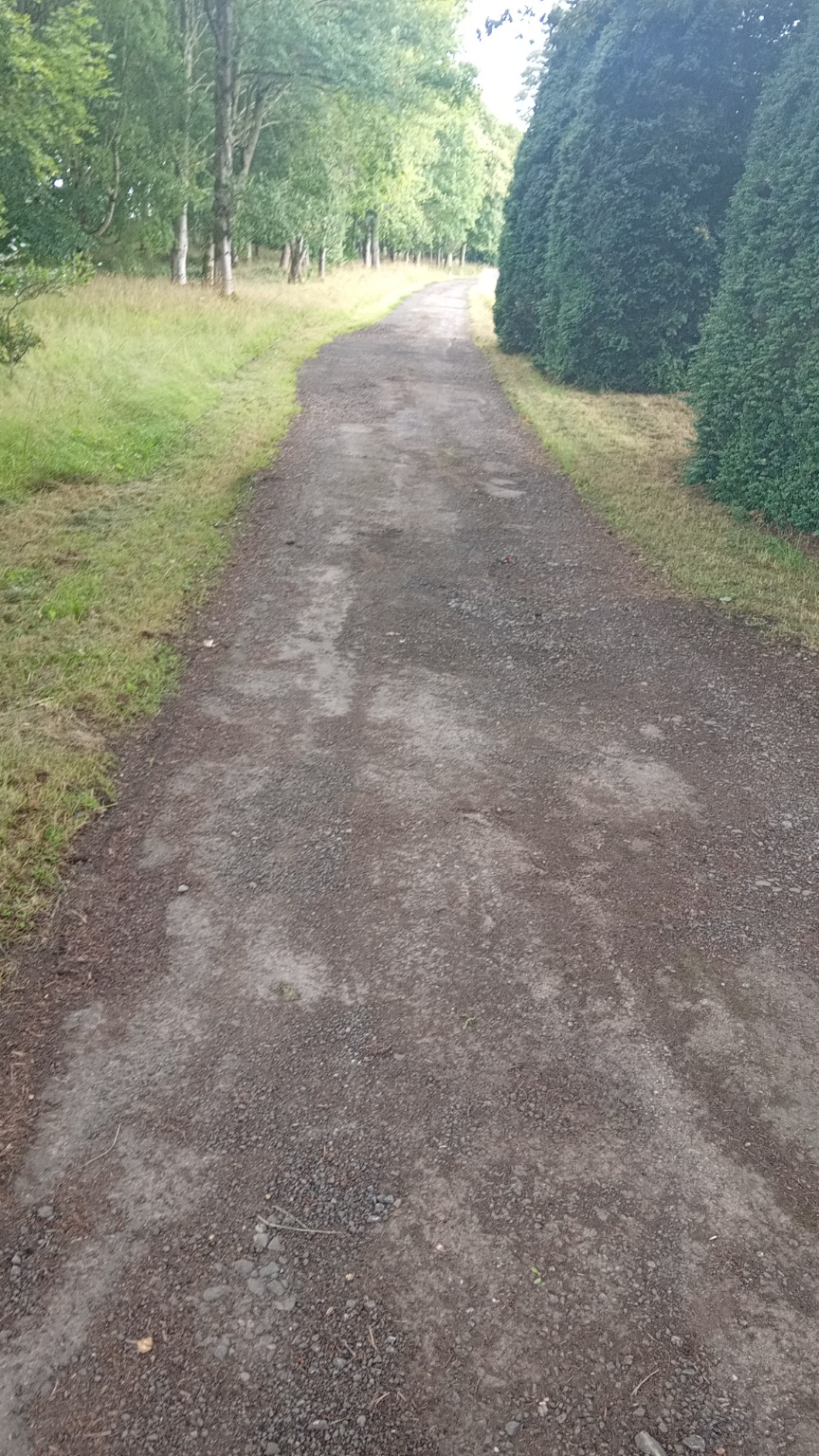
The failing tarmac road, previously patched with road planings, before our surface preparation and repairs.
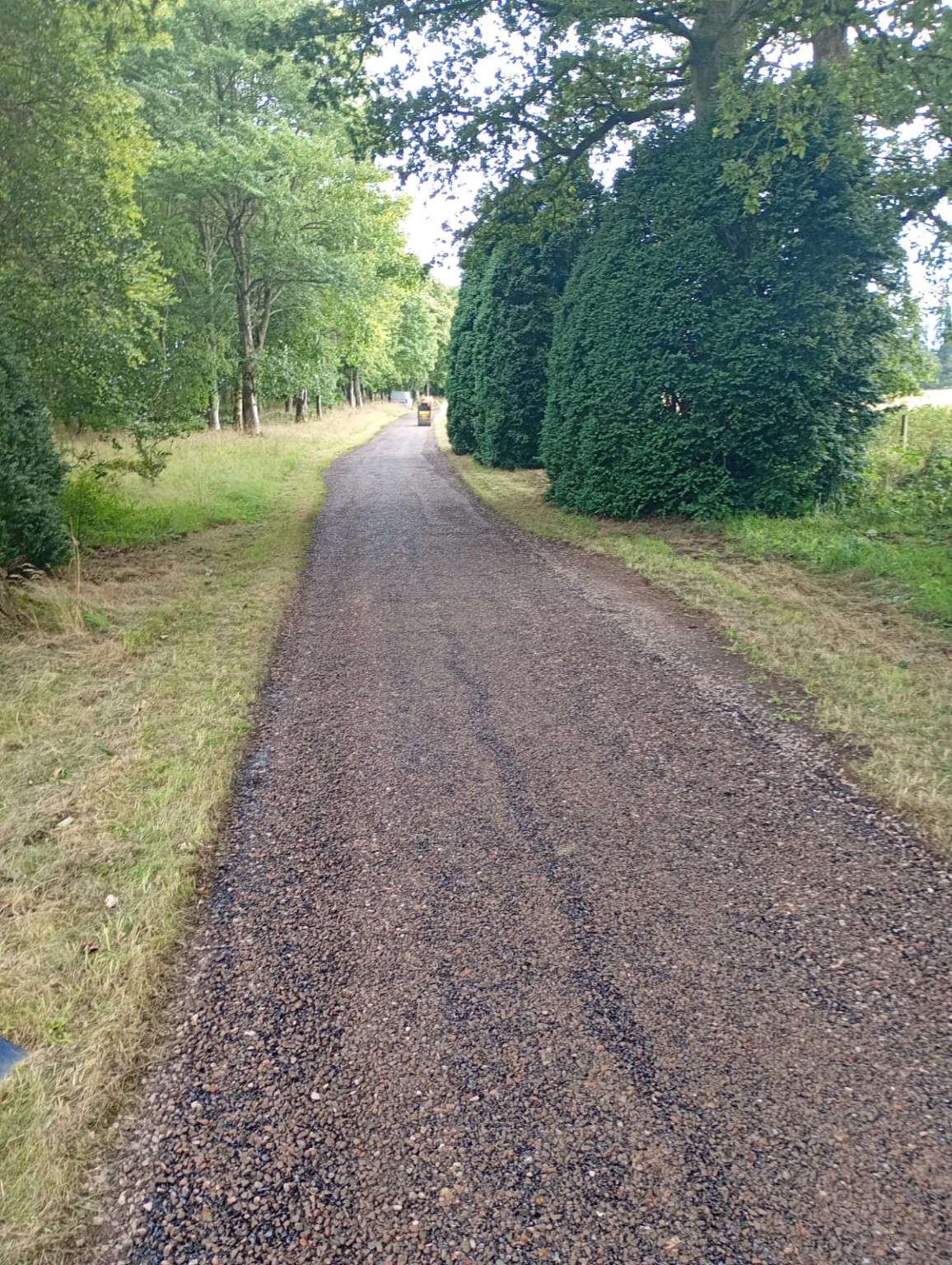
After preparation, pothole repairs and two machine-laid coats of hot polymer-modified bitumen and stone chippings.
St Fillans Golf Club entrance
Cleaning and preparation of the existing entrance, followed by the stone surface after dressing.
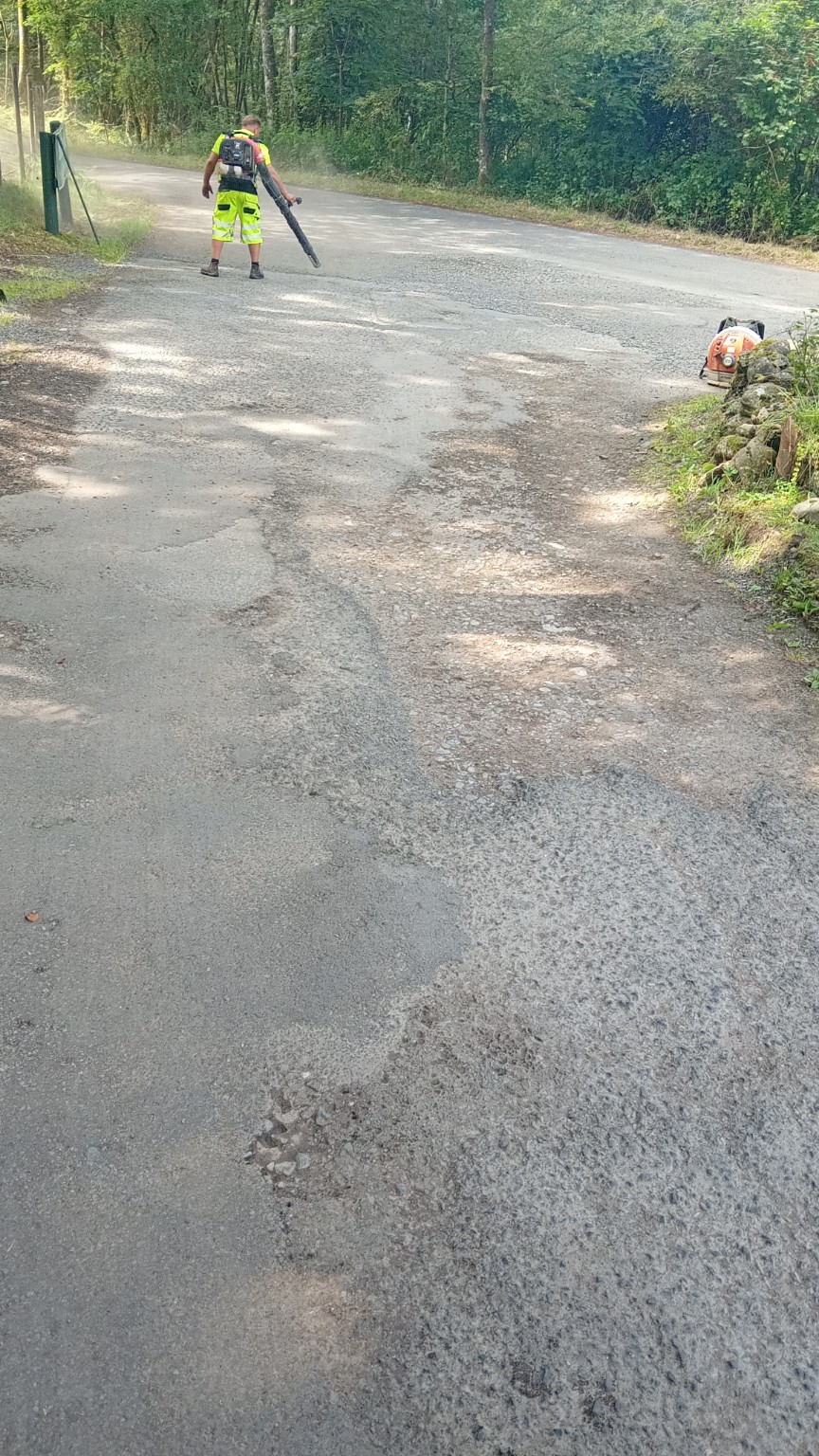
Before: cleaning & preparation
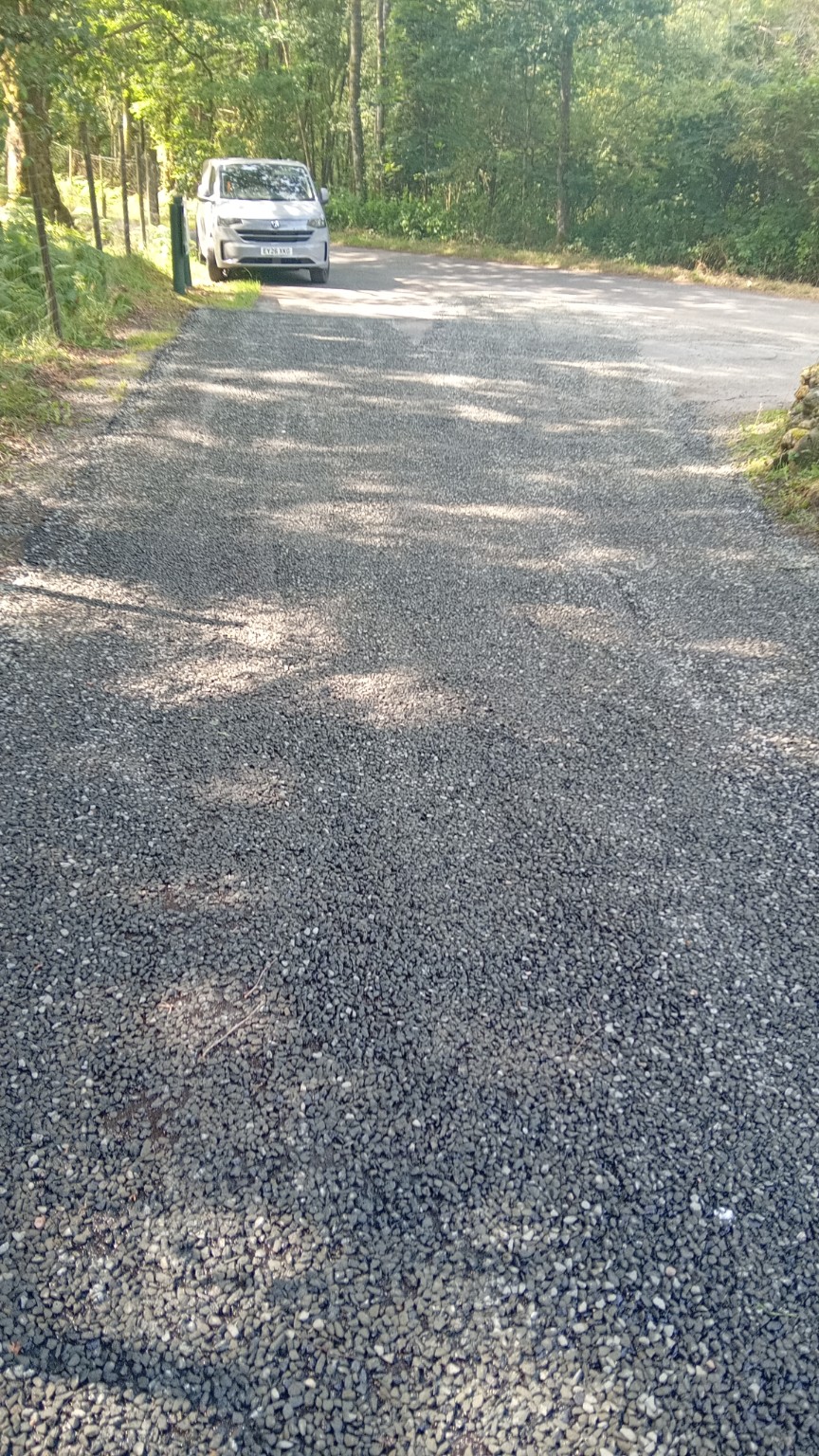
After surface dressing
Private shared roadway & driveway near Fort William
Machine grading, levelling and rolling, with MOT Type 1 used to build up low areas and potholes. Two coats of hot polymer latex bitumen tar-and-chip surface dressing were machine applied, followed by a black Armourseal coating for a tarmac-look finish.
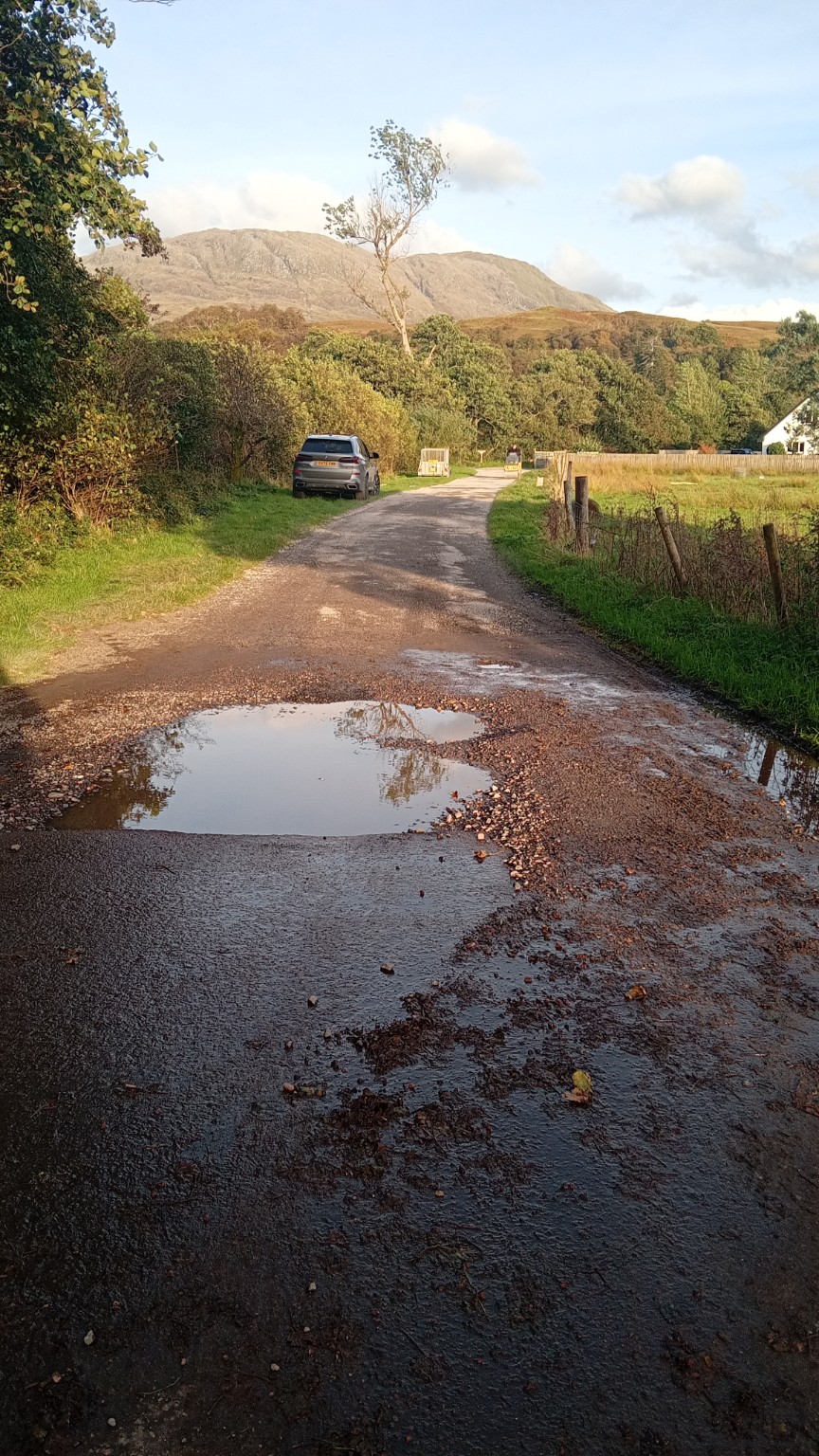
Potholes and standing water along the shared roadway before preparation.
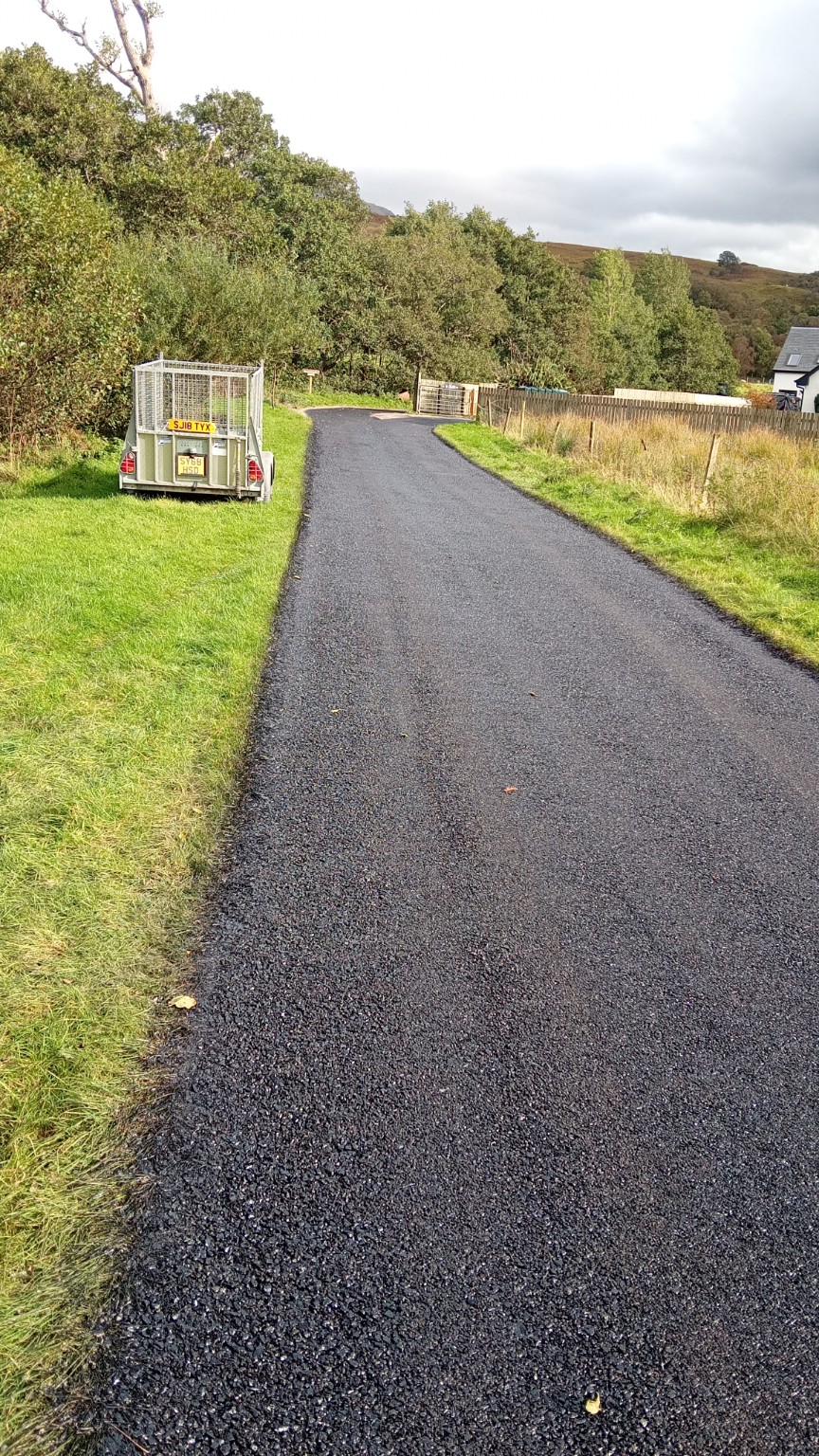
The completed shared roadway: two-coat tar-and-chip surface dressing finished with black Armourseal.
Shared roadway entrance near Fort William
The entrance to the same private shared roadway near Fort William, before repairs and after tar-and-chip surface dressing. See the full project album for preparation and the black Armourseal finish.
Potholes and standing water along the shared roadway before preparation.
The completed shared roadway: two-coat tar-and-chip surface dressing finished with black Armourseal.
Surface dressing in pictures
Binder application, specialist equipment and stone finishes on roads, paths and access areas. Select a photograph to see the full image.
Near Fort William — completed shared roadway
The completed shared roadway: two-coat tar-and-chip surface dressing finished with black Armourseal. Near Fort William, Scotland.
Spray-applied bitumen binder
Bitumen binder being sprayed along a rural road during preparation for the stone chippings.
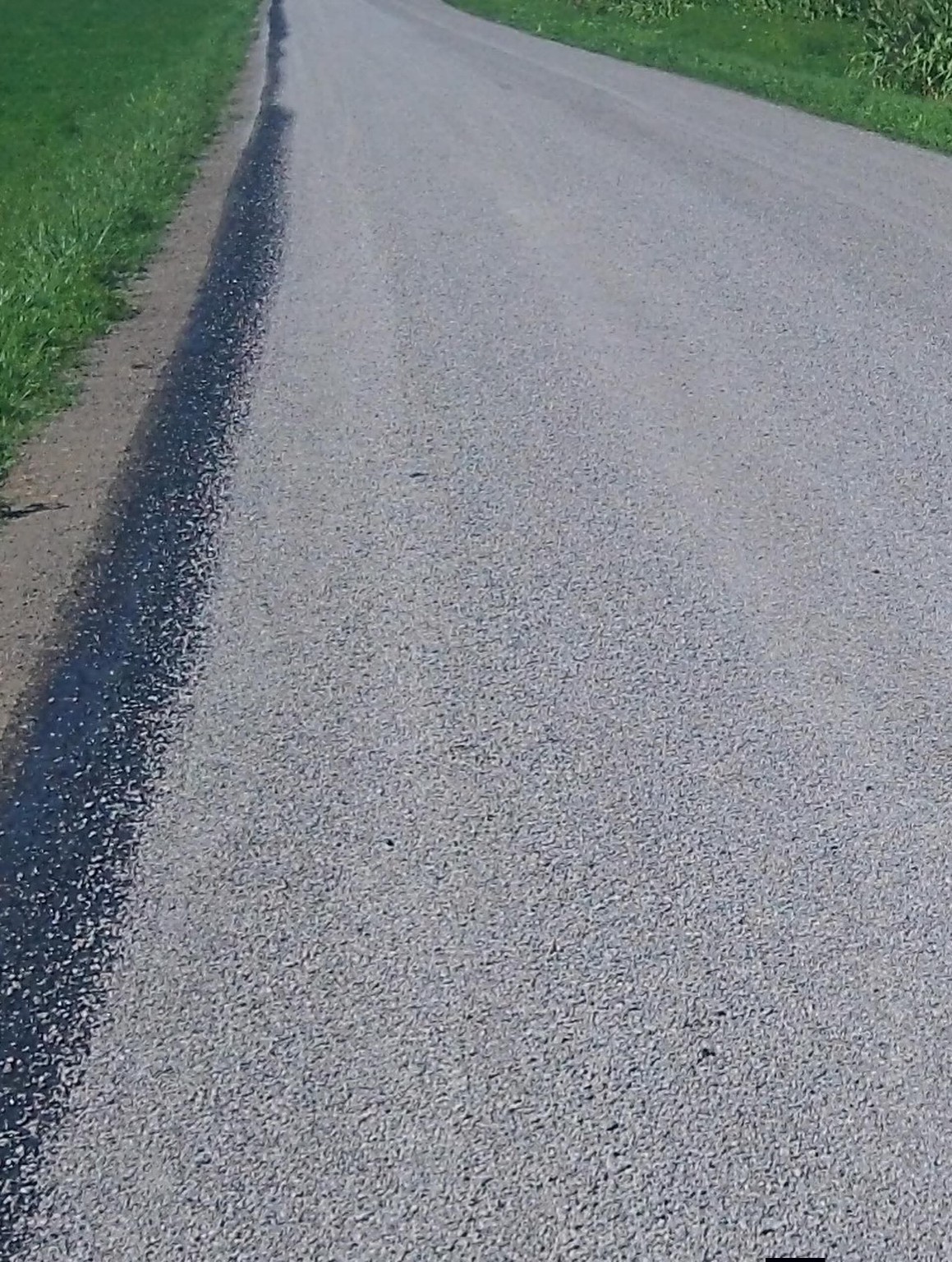
Grey stone surface dressing
A close view of grey stone chippings forming a tar and chip road surface beside grass verges.
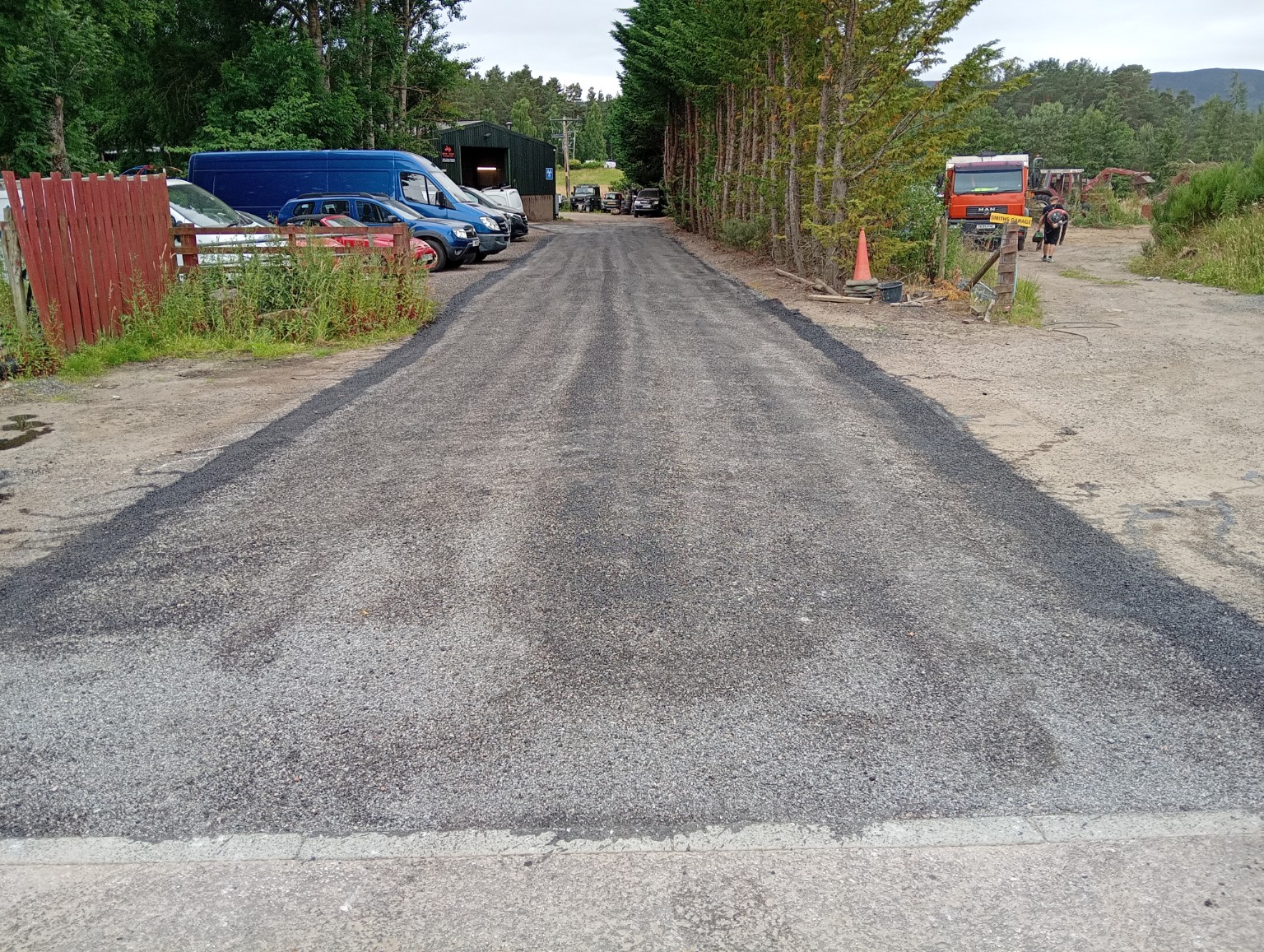
Surface dressing for business access
A surface-dressed entrance and access road leading to workshop premises.
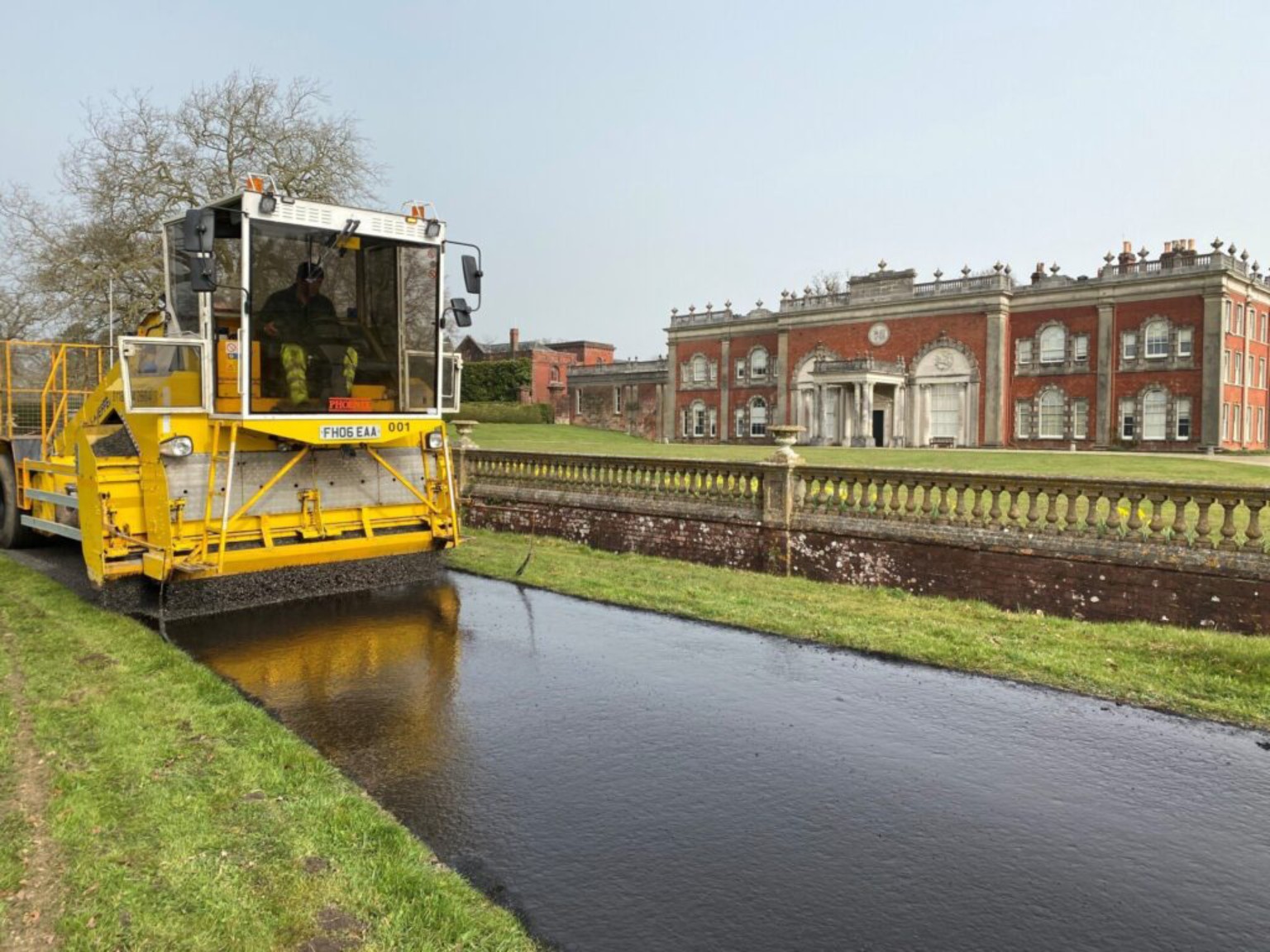
Surface dressing on an estate path
A chip spreader applying stone to a bitumen-treated path beside a country house.
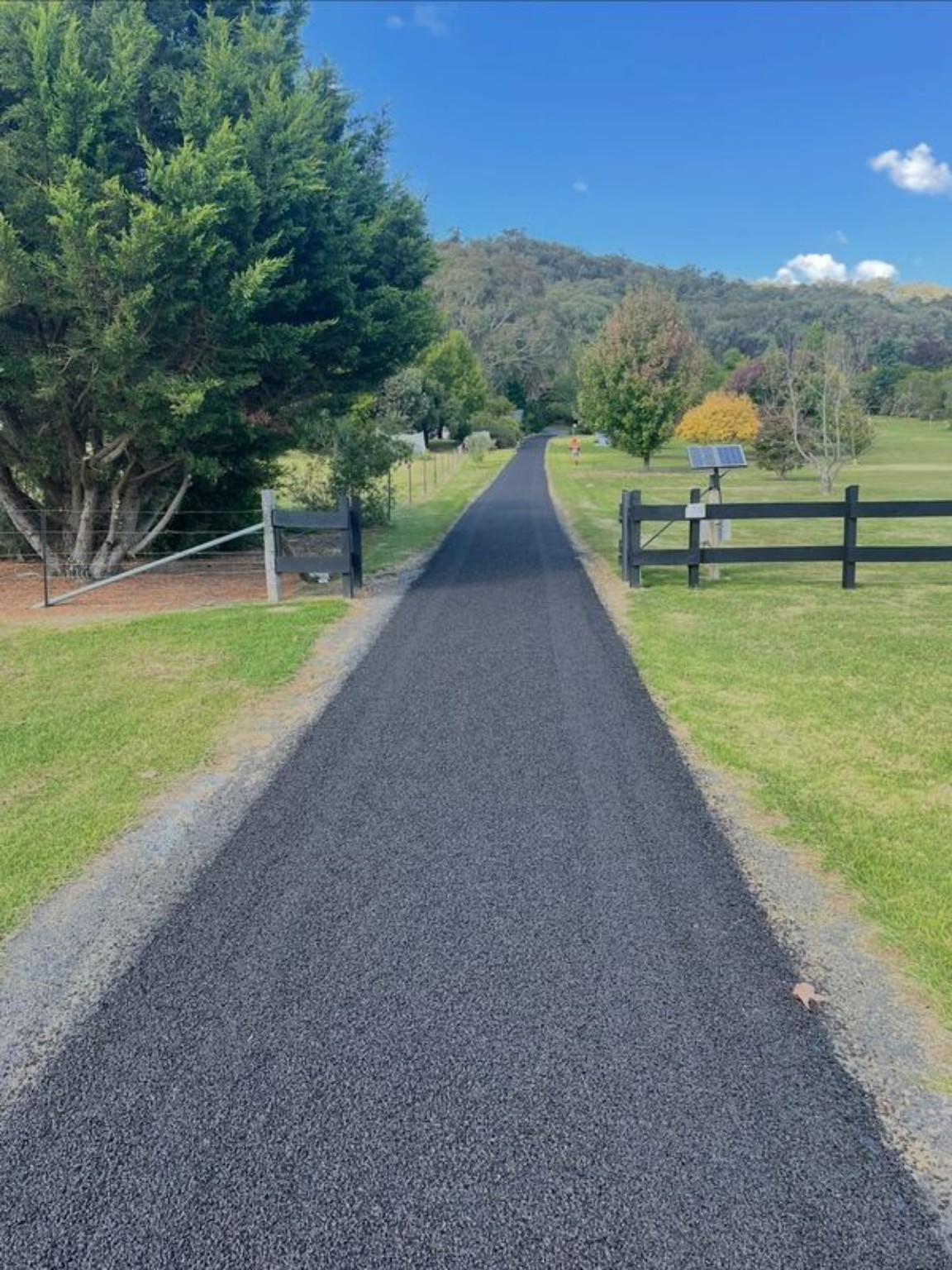
Hot tar & chip private access drive
A hot tar and chip surface-dressed drive running through a gated entrance between lawns and trees.
Clear pricing, written down.
Price depends on the area, existing condition, access, preparation, materials and location. Your written quotation sets out the work and VAT clearly before you commit.
Our workmanship guarantee is five years, subject to the written terms supplied with your quotation. Ask us about the coverage and aftercare for your chosen surface.
Your questions
What can surface dressing be applied to?
Suitable surfaces can include sound existing tarmac or asphalt, well-constructed and compacted roadstone bases, prepared recycled asphalt planings and some concrete roads, driveways and footpaths. We assess stability, cleanliness, drainage and adhesion before confirming the preparation and treatment.
Can you surface dress an existing tarmac or asphalt road?
Yes, where the underlying pavement is sound. We clean the surface and identify potholes, failed patches, uneven areas and drainage issues so that the necessary repairs can be completed before dressing.
Can surface dressing be laid over a roadstone or hardcore base?
A properly constructed, graded and compacted roadstone base may be suitable. We check that it is stable and well drained, regulate low spots and specify any additional preparation or sealing needed before applying the surface dressing.
Can you apply surface dressing over existing road planings?
Potentially, once the planings form a sound, well-compacted base. Loose, contaminated, soft or uneven areas need attention first. We inspect the material and agree grading, additional stone, compaction and any other preparation required.
Can you surface dress cracked concrete drives, roads or footpaths?
Some concrete surfaces can be treated after suitable cleaning, repairs and preparation. We first inspect cracks, joints, adhesion and slab movement. Unstable or badly damaged concrete needs repair or replacement, and movement at existing cracks or joints can reappear through a new surface treatment.
Do you carry out pothole repairs before surface dressing?
Yes. We can include pothole repairs and patching in the preparation package. Failed material is removed where necessary, the base repaired and suitable material compacted before the whole prepared area is dressed.
Can you level and prepare the whole area?
Yes. We can include general groundwork, grading, levelling, regulation and rolling. Regulation means filling low areas and correcting the surface profile with suitable material. The survey identifies what needs to be done to provide a stable base and appropriate drainage.
Why do you recommend two coats of surface dressing?
Our recommendation is a two-coat system for a high-quality finish: a first application of binder and stone, followed by a second application and further rolling. This builds a more substantial stone dressing than a single application. We confirm aggregate sizes, application rates and suitability for the base and its use in the written specification.
How do your combi units apply the surface dressing?
Our specialist 2-in-1 combi units combine binder spraying and chip spreading. Hot-applied latex polymer-modified bitumen is spray-applied, followed within seconds by selected stone chippings. Rolling then seats the stone in the binder. Controlled temperature, application rates and timing support consistent coverage and strong adhesion.
Are tar and chip, hot tar and chippings and bitumen bonded aggregate the same as surface dressing?
These are familiar names for the bitumen-and-stone surface dressing service we provide. Your quotation identifies the binder, selected aggregate, number of coats and preparation for your project.
Can I choose a different aggregate colour?
Yes. For private driveways, paths and access roads, we offer golden-coloured gravels, rustic tones and other coloured chippings and stones, including a traditional gravel-style finish. Ask us for a selection of available colours when requesting your quotation. We help you choose a finish to suit your property and its use, subject to material availability and suitability.
What chippings do you use for commercial and public-sector surface dressing?
We use triple-washed, high-PSV granite roadstone chippings for all our commercial and public-sector surface dressing projects. PSV stands for polished stone value. The aggregate size and required PSV are selected to suit the traffic, site conditions and agreed project specification.
Can you surface dress canal paths and footpaths?
Yes, where the route and base are suitable. We assess drainage, width, pedestrian use and machinery access, then agree preparation and the stone finish with the client or asset owner.
Do you cover the whole of Scotland and the islands?
Yes. We welcome surface dressing enquiries across mainland Scotland, the Western Isles, Orkney, Shetland and the other Scottish islands. Access, transport and the work programme are agreed for each project.
Can you surface dress school, care-home or caravan-park grounds?
We can assess access roads, parking and pedestrian areas at these sites. The proposed use, base, drainage, access arrangements and aftercare determine where the treatment is suitable and how the work should be planned.
Do you offer both agricultural and commercial surface dressing?
Yes. We welcome farm-lane, steading, forecourt, estate and commercial enquiries. We assess each section separately because a lightly trafficked access route and an intensively used working yard may need different specifications.
Surface dressing across Scotland
We welcome enquiries across Scotland. Select your area and tell us about the site, access and required work so we can discuss the next step.
- Inverness
- Fort William
- Oban
- Glasgow
- Edinburgh
- Perth
- Stirling
- Dundee
- Aberdeen
- Elgin
- Dunfermline & Fife
- Ayr & Kilmarnock
- Crieff
- Comrie
- Fraserburgh
- Dumfries & Galloway
- Scottish Borders
- Western Isles
- Orkney
- Shetland
- Other Scottish islands
Travel, crew availability and island transport are agreed for each project. View the full town and service-area directory.

 Visit our Facebook page