
View road planing & recycled planings gallery
Where this service fits
- Planing out failed tarmac, potholes and damaged patch-repair areas
- Carriageways, roadways and public-sector resurfacing preparation
- Shopping-centre, commercial, tourist-attraction and general car parks
- School grounds, garden centres, caravan parks and visitor sites
- Recycled planings for suitable farm roads, estate lanes and private access roads
- Farm courtyards, steadings, forecourts, working yards and parking extensions
- Commercial vehicle-storage areas and suitable larger hardstanding projects
- Compacted planings bases prepared for a specified surface dressing finish
Road planing and damaged asphalt removal
We plane out deteriorated tarmac and asphalt to prepare for patch repairs or larger resurfacing work. This can include isolated failed areas, worn carriageways, roadways and sections where levels need to be adjusted before a new surface is laid.
Work is available for commercial car parks, schools, garden centres, caravan parks, tourist attractions and public-sector sites. The planing depth and extent are set for each job, with care around drainage, covers, kerbs and buried services.
Recycled road planings supplied, laid and rolled
We supply and install recycled asphalt road planings for suitable farm roads, private roads, estate tracks, courtyards, yards and parking areas. Depending on access and the size of the job, the material can be machine laid or hand laid, graded to the required levels and power rolled.
A planings-based surface can offer a cost-effective alternative for suitable sites. We assess the foundation, drainage and expected vehicle use, then agree the material, laid thickness and any finishing treatment.
- Farm lanes, agricultural access roads, steadings and forecourts
- Estate roads, private access routes and larger rural entrances
- Suitable commercial parking, vehicle-storage areas and car park extensions
- Garden-centre parking and selected caravan-park access or service areas
Preparation, grading and compaction
We inspect the underlying ground and identify potholes, soft spots and drainage problems before laying. Preparation can include excavation, removing unsuitable material, strengthening low or weak areas and establishing the required falls.
The planings are spread and graded to the agreed profile, then compacted with suitable rolling equipment. This preparation creates a more even, stable running surface and supports any later surfacing layer.
Bitumen-emulsion and specialist bonding treatments
Where appropriate, we can include a specified bitumen-emulsion or specialist bonding treatment for the prepared road planings. These treatments are selected to help bind and seal the material; a suitable rejuvenating treatment may be proposed for the existing aged binder.
We agree the product and application method for the actual material and site conditions. Preparation, compaction, curing and opening to traffic are considered together when setting out the work.
Finish road planings with hot tar and chip
For a suitable, well-compacted planings base, we can provide a follow-on hot tar-and-chip surface dressing treatment. Our recommended two-coat system combines bitumen binder and selected stone chippings, with rolling after each application as specified for the project.
The aim is an even, sealed stone finish over a prepared base. Aggregate choice, traffic, drainage and the underlying construction determine the specification and aftercare. See our surface-dressing page for the combi-unit process, commercial roadstone and private-property colour choices.
How we approach the work
- Assess the existing construction, damaged areas, levels, drainage, traffic and machinery access.
- Agree whether the work involves asphalt removal, laying recycled planings, or a complete preparation and surfacing package; confirm quantities, depths and boundaries.
- For removal work, plane out the agreed sections, collect the arisings and sweep the exposed surface before inspecting for further repairs.
- For laying work, repair weak ground and regulate low areas, then supply suitable recycled asphalt planings to the agreed material specification.
- Machine lay or hand lay the planings as access allows, grade to the required profile and power roll to compact the material.
- Where specified, apply the selected bonding or bitumen-emulsion treatment, or complete the prepared base with hot tar-and-chip surface dressing.
- Check the completed work and explain opening to traffic, any treatment curing period and the aftercare for the selected finish.
A durable surface depends on the foundation, drainage, material and compaction. We agree the planing depth or laid thickness, preparation, material handling and any surface treatment in writing. A bonding treatment or surface dressing cannot make unstable ground structurally sound; weak areas need to be dealt with during preparation.
Road planing & recycled asphalt projects
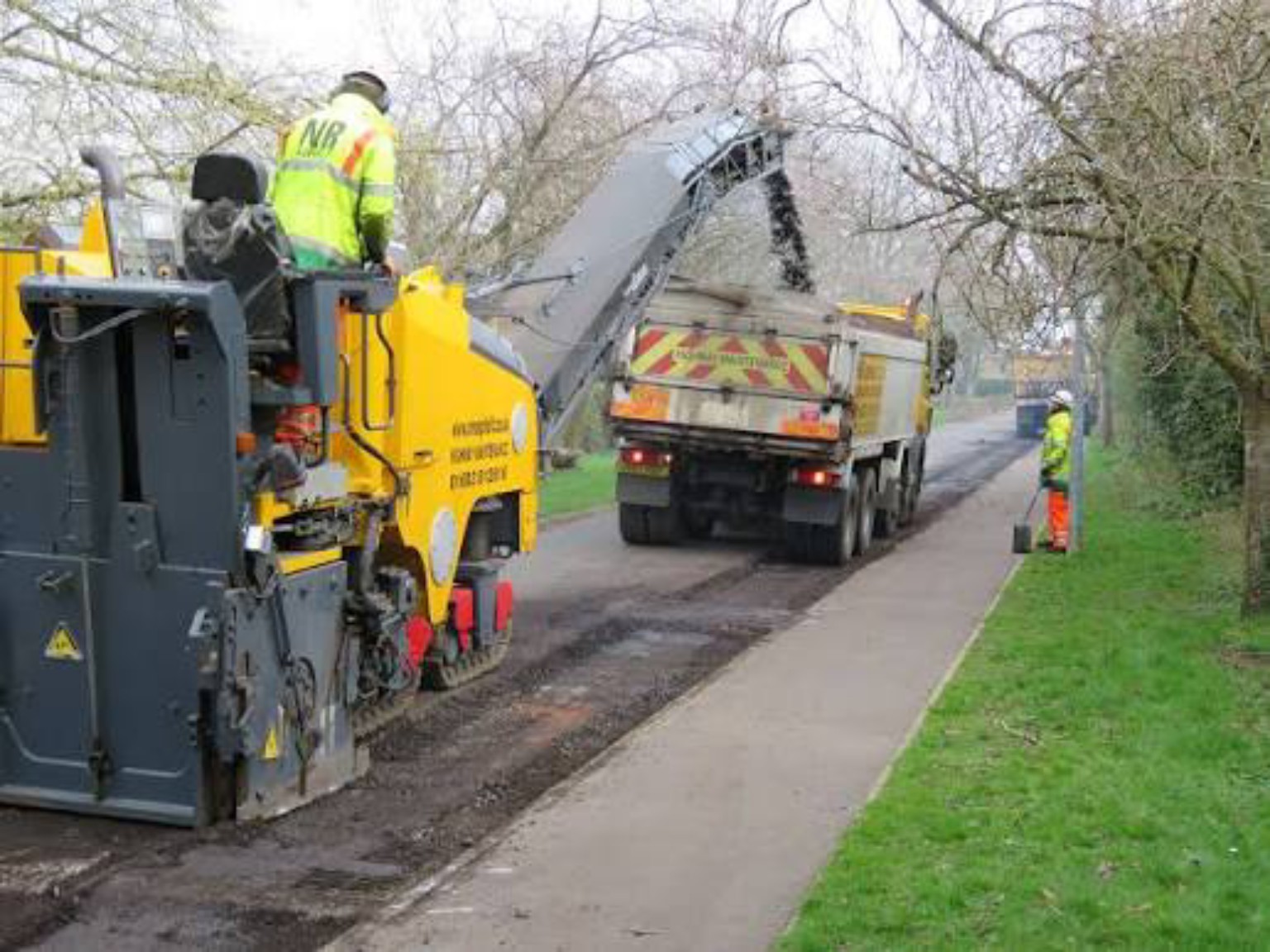
Estate road planing in the Scottish islands
Planing out an existing country-estate road in the Scottish islands. The milling machine removes the agreed section of old asphalt and loads the arisings into a tipper, preparing the route for the next stage of work.
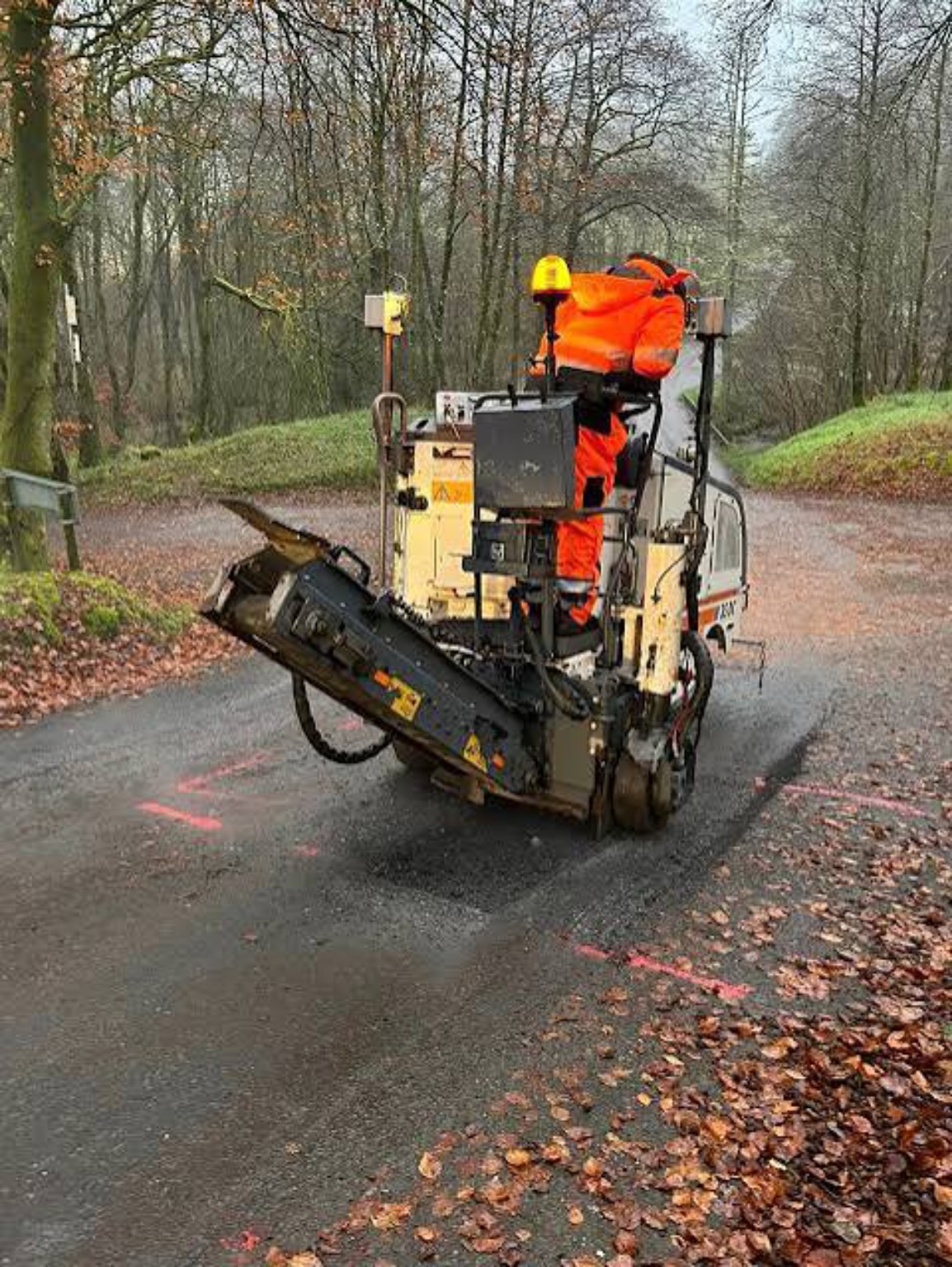
Visitor car park planing near Aviemore
Road planing at a tourist-attraction car park near Aviemore, Scotland. Controlled removal of the existing asphalt prepares the agreed areas for repairs and resurfacing, with access and work phases planned around the site.
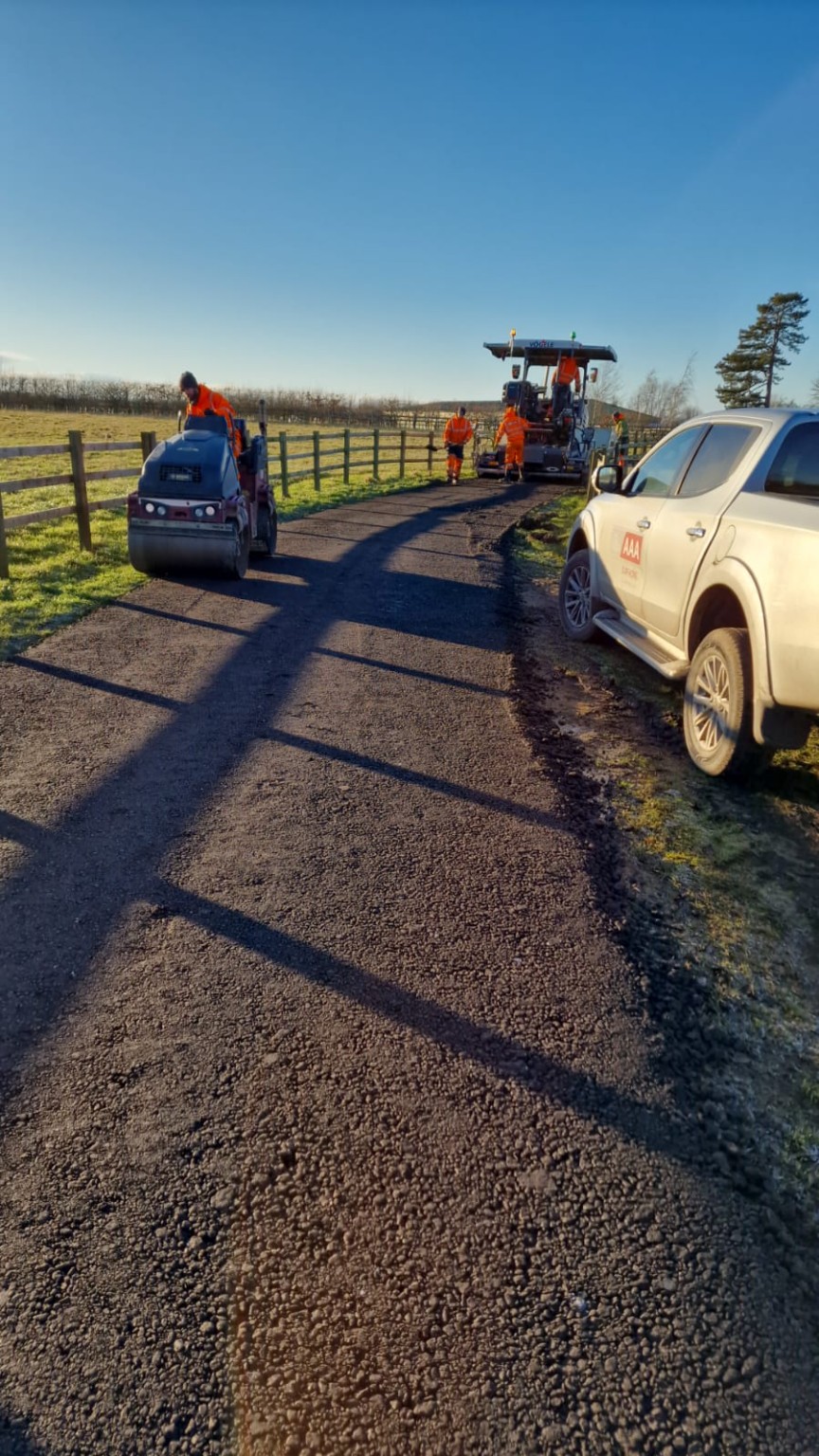
Machine-laid road planings in Oban
Recycled asphalt road planings being machine laid and rolled on a farm road in Oban, Scotland. The material is spread to the agreed levels and compacted to form a practical farm access surface.
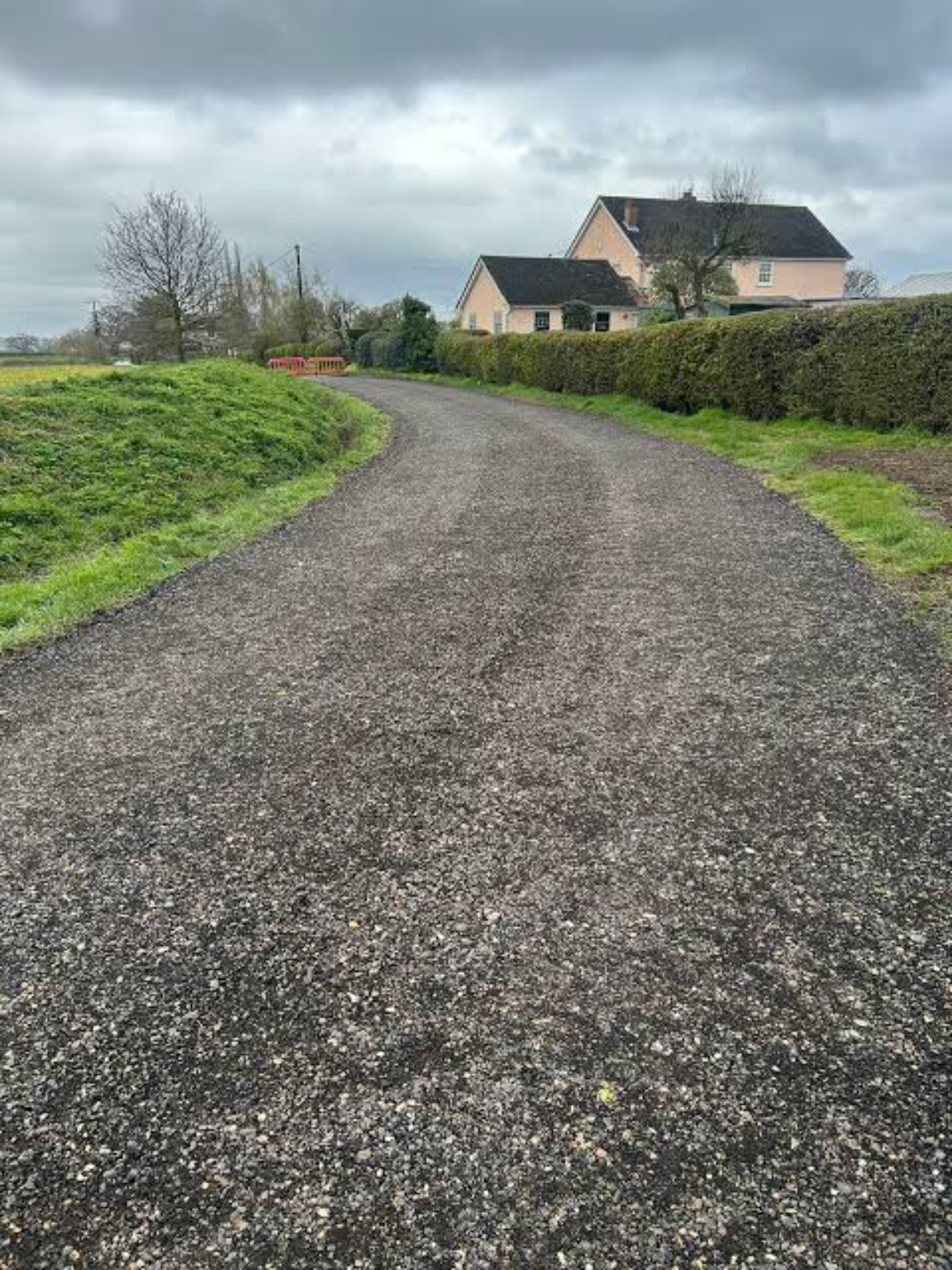
Recycled asphalt farm track in Kirkcaldy, Fife
Recycled asphalt road planings laid along a farm track in Kirkcaldy, Fife. The finished route follows the farm approach, with the planings graded and compacted to provide an even running surface.
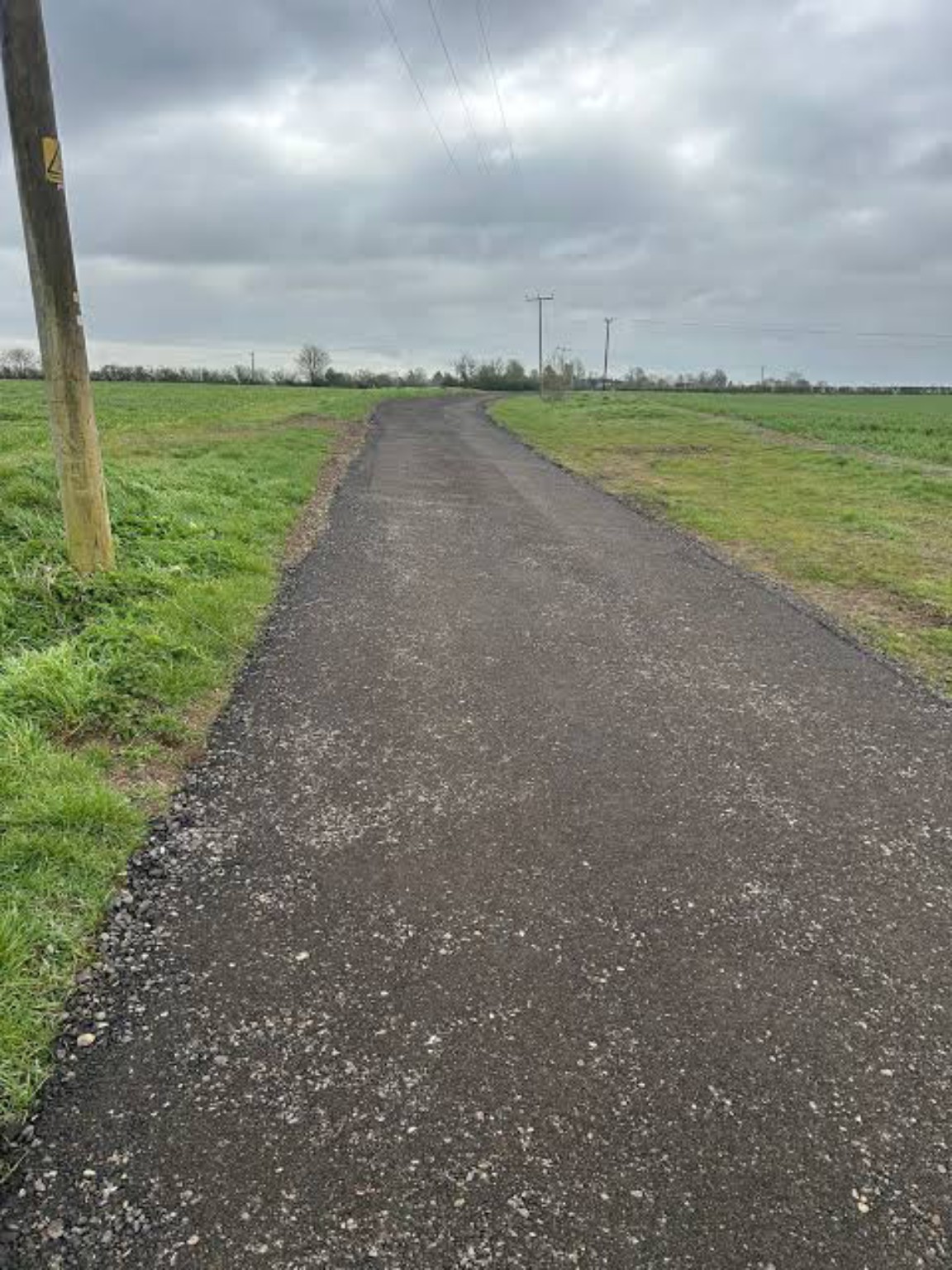
Road planings supplied and laid in Morayshire
Road planings supplied, laid and power rolled to form a prepared base in Morayshire, Scotland. The work establishes the line and levels of the access road, ready for its agreed use or follow-on surface treatment.
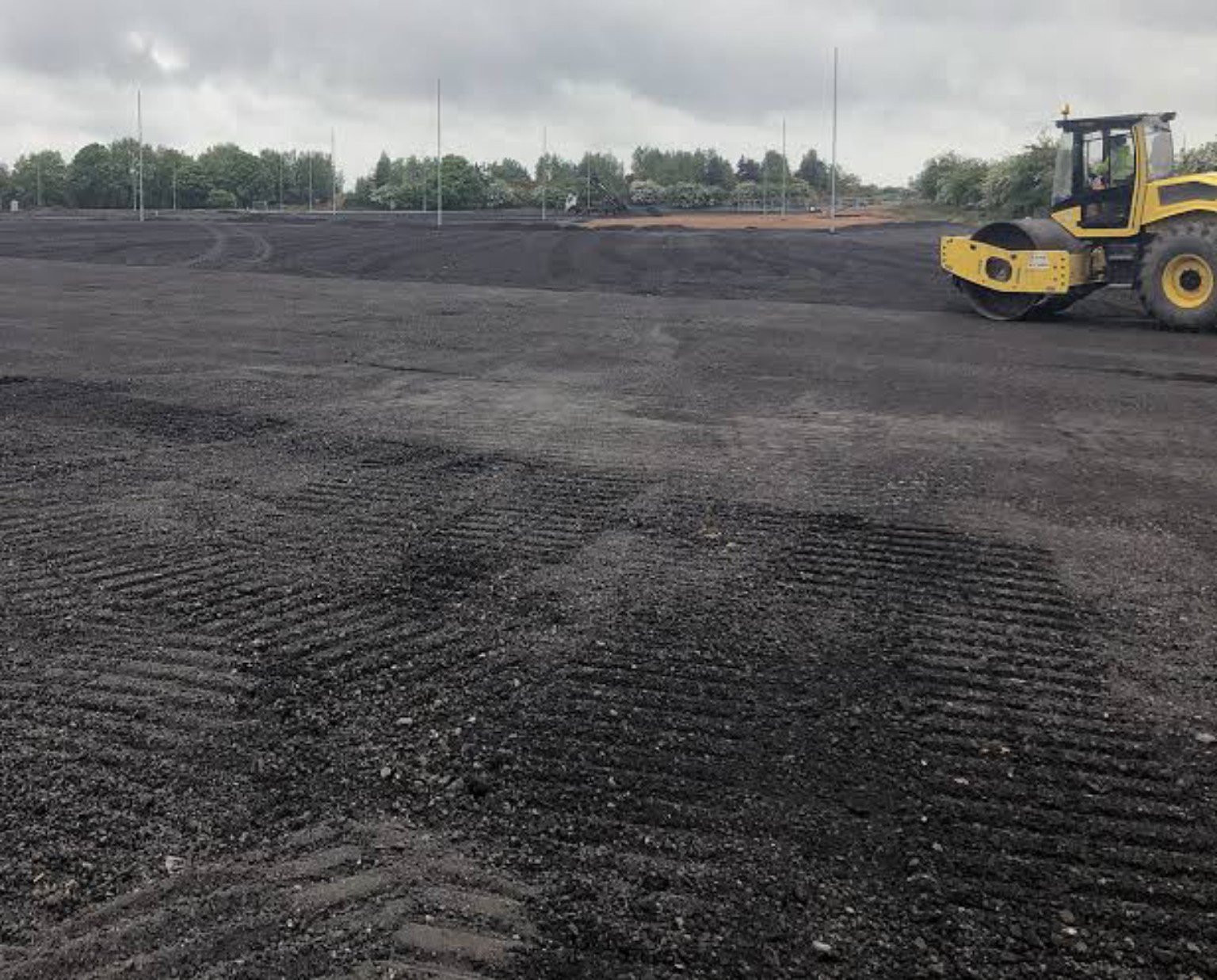
Recycled asphalt for airport vehicle storage
A large commercial airport car-storage project using laid and compacted road planings. A specialist bonding treatment was included to help bind the material and rejuvenate the existing bitumen, following the agreed project specification.
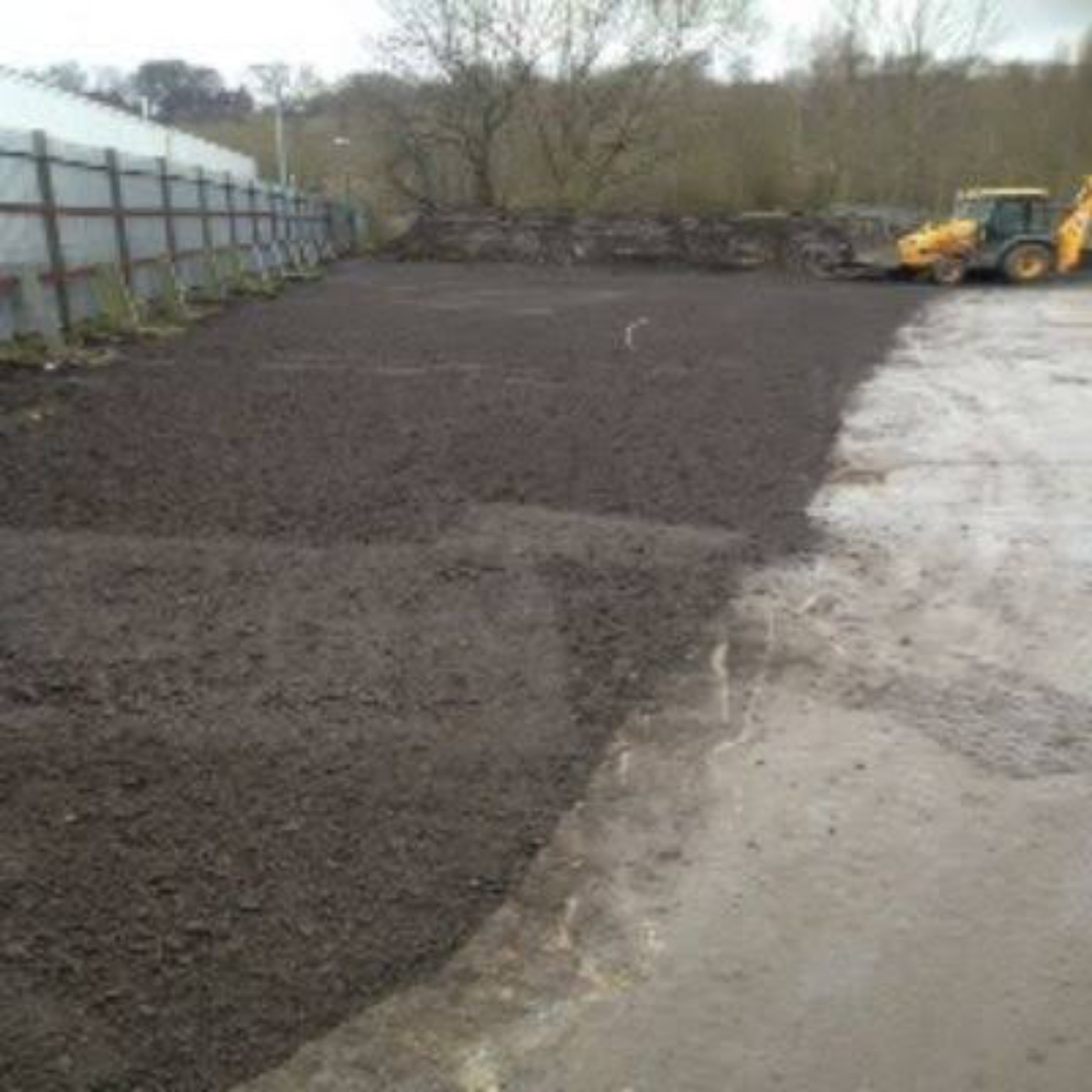
Garden-centre car park extension
Extending a garden-centre car park with recycled asphalt road planings. The material is spread, power rolled and compacted to create additional parking space, with levels and connections to the existing car park considered in the preparation.
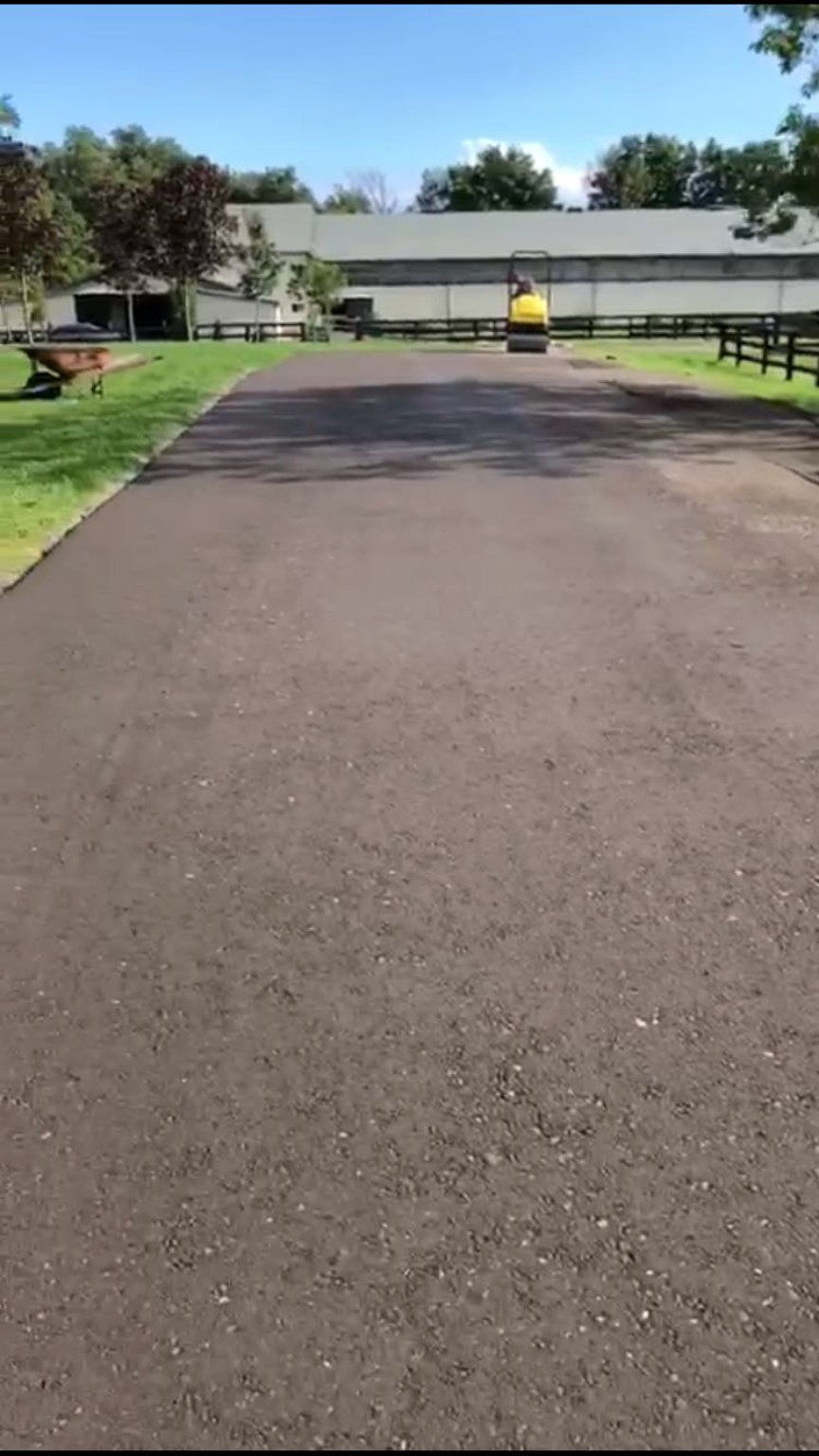
Machine-laid planings for a farm courtyard and yard
A large farm courtyard and access area surfaced with machine-laid recycled asphalt road planings. Grading, rolling and compaction form the prepared surface across the yard, access lane and parking area.
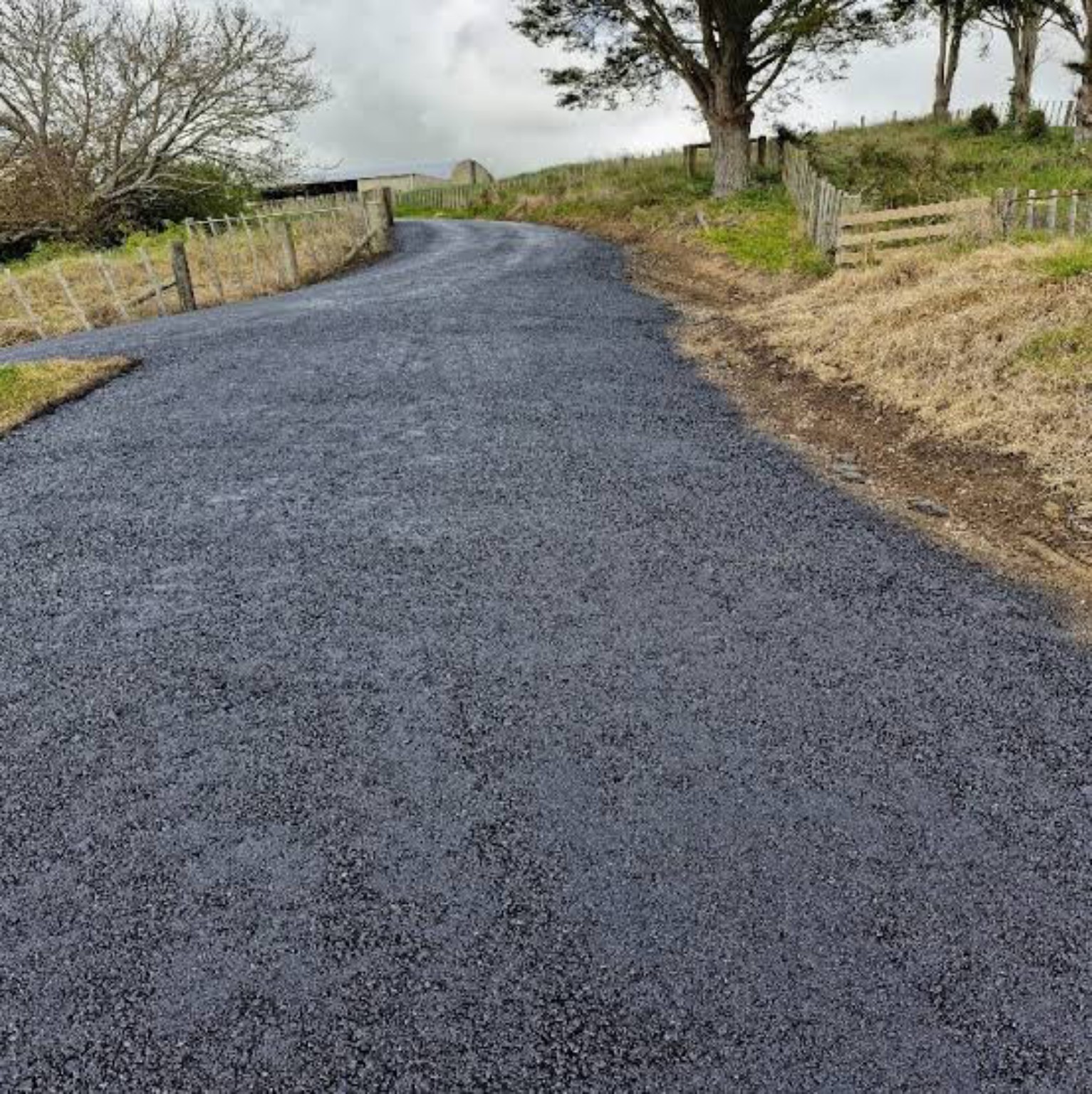
Farm road with a bitumen-emulsion treatment
A Scottish farm road laid with recycled asphalt planings and sprayed with a specified bitumen emulsion to help bind and seal the surface. Preparation, compaction and the selected treatment form part of the agreed surfacing system.
Clear pricing, written down.
Price depends on the area, existing condition, access, preparation, materials and location. Your written quotation sets out the work and VAT clearly before you commit.
Your questions
What is the difference between road planing and laying road planings?
Road planing, also called asphalt milling, removes an agreed thickness of existing tarmac or asphalt. Road planings are the reclaimed material. We offer both asphalt removal and the supply, laying and compaction of suitable recycled planings for a separately specified project.
Can you plane out small damaged sections as well as whole roads?
Yes. We can plane out failed tarmac sections and patch-repair areas, or prepare larger stretches of road and carriageway for resurfacing. The area, removal depth, machinery access and follow-on repairs are agreed in the quotation.
Do you work at car parks, schools, garden centres and caravan parks?
Yes. We carry out road planing at these sites, as well as commercial premises and tourist attractions. We plan around site users, access and the agreed programme. Recycled planings may also suit selected parking or access areas following assessment.
Where can recycled asphalt planings be laid?
Suitable applications can include farm roads, estate lanes, private access roads, yards, courtyards, steadings, parking extensions and vehicle-storage areas. We assess the foundation, drainage, traffic, gradients and turning movements before recommending a construction and finish.
Are road planings a cheaper alternative to new tarmac?
They can be a cost-effective option for suitable tracks, yards and parking areas. The total cost depends on preparation, material quantity, transport, access, compaction and any treatment or finishing layer. We can compare a planings-based option with new asphalt in your written quotation.
Can you supply and machine lay the planings?
Yes. We supply and lay recycled asphalt planings, using machine laying for suitable accessible areas and hand laying where the layout requires it. Grading, levelling, rolling and compaction are included as set out in the agreed scope.
Can you treat or rejuvenate a road-planings surface?
A specified bitumen-emulsion or specialist bonding treatment can be included where suitable to help bind and seal a prepared planings surface. Where a rejuvenating treatment is proposed, we agree the product, application method and expected finish for the material. The base and drainage must be sound first.
Can hot tar and chip be applied over road planings?
Yes, where the planings form a suitable, stable and well-compacted base. We can include preparation and a two-coat surface dressing system using bitumen binder and selected chippings, followed by rolling. The finish and aggregate are specified for the site and its use.
Will the finished surface be completely smooth?
Grading and compaction create a more even profile, while the chosen material and treatment determine the surface texture. A tar-and-chip finish has a stone-chip texture. We discuss the appearance and intended use before agreeing whether compacted planings, surface dressing or new asphalt is the best option.
Do you remove the material when planing out old asphalt?
Collection and removal of the arisings can be included in the agreed scope. We confirm material handling and any assessment or classification needed before deciding the appropriate recovery or disposal route.
What should I send for a quotation?
Send your site postcode, approximate length and width or total area, photographs of the whole site and damaged sections, and details of vehicle use and access. Include any specified depth and tell us whether you need removal, recycled planings laid, a surface treatment or a complete resurfacing package.
Road planing and recycled planings across Scotland
We welcome road planing, asphalt removal and recycled planings enquiries across Scotland, including Inverness, Fort William, Oban, Aviemore, Elgin and Moray, Perth, Dundee, Fife, Glasgow and Edinburgh. Tell us your site postcode, access and the work required so we can agree availability and transport.
- Inverness
- Fort William
- Oban
- Glasgow
- Edinburgh
- Perth
- Stirling
- Dundee
- Aberdeen
- Elgin
- Dunfermline & Fife
- Ayr & Kilmarnock
- Crieff
- Comrie
- Fraserburgh
- Dumfries & Galloway
- Scottish Borders
- Western Isles
- Orkney
- Shetland
- Other Scottish islands
Travel, crew availability and island transport are agreed for each project. View the full town and service-area directory.

 Visit our Facebook page